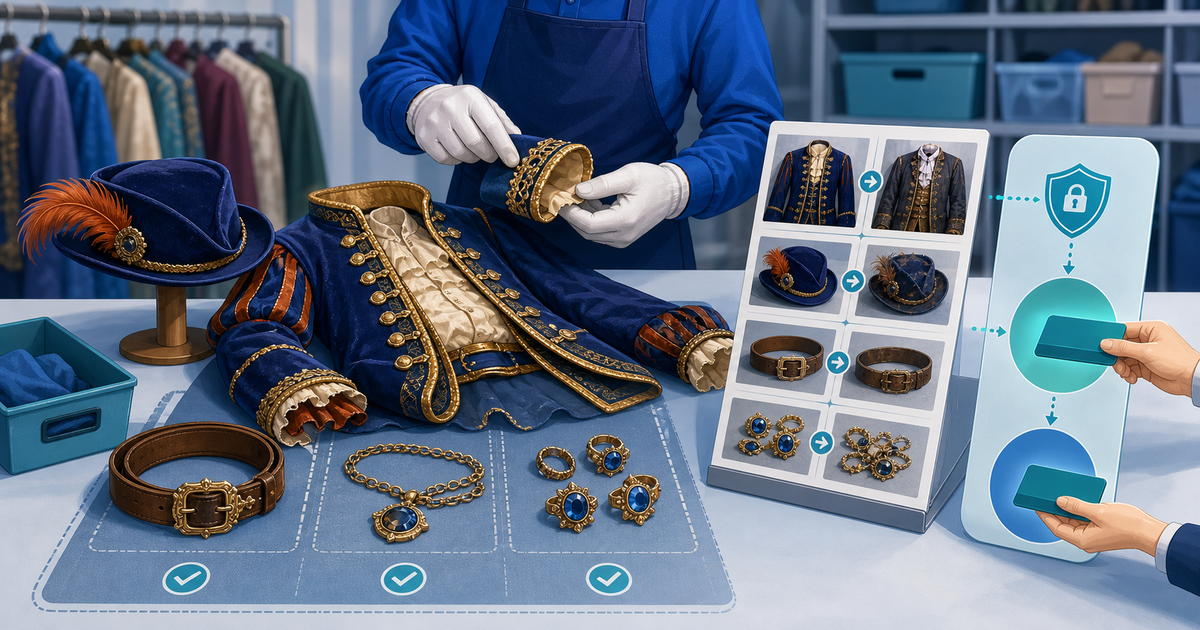
A costume-rental deposit should be released or captured from paired evidence: the same garment, accessories and condition zones recorded at dispatch and return. Photographing only a new stain is weaker than showing that the numbered costume left clean, returned stained and was assessed against terms the renter received before authorization.
This checklist is for costume shops, theatres and wardrobe departments. Its original asset is a garment-and-kit condition ledger built for matched sets, alterations, cleaning and late returns.
Use One Paired Costume Ledger
| Field | Dispatch record | Return record | Decision use |
|---|---|---|---|
| Costume ID and production | Barcode or unique label | Same label visible | Connects evidence to the right rental |
| Garment and size | Item, size and distinctive details | Identity confirmed | Prevents swapped-item disputes |
| Components | Jacket, shirt, belt, hat, jewellery: 5/5 | Returned count and exceptions | Supports missing-piece assessment |
| Condition zones | Front, back, cuffs, hem, closures, lining | Same angles after return | Separates existing wear from new damage |
| Approved alterations | Written permission and limits | Stitching/removal checked | Distinguishes approved work from damage |
| Cleaning state | Clean and ready-to-wear status | Soil, makeup, odour or treatment needed | Supports a stated cleaning decision |
| Timing | Handover date and due date | Received date and time | Supports an agreed late-return rule |
Current costume-rental policies commonly separate damage, loss, cleaning, missing components and late return. For example, Brandeis University costume rental terms state that deposits may cover damaged or lost costumes and publish a separate late-fee rule. Use your signed terms and local law; there is no universal deposit percentage or capture deadline.
Separate the Rental Fee From the Deposit Hold
The rental fee pays for the agreed use period. A pre-authorization hold reserves capacity on the renter's card for defined exceptions; it is not revenue and should not be described as a refund waiting to happen. A captured charge and a released hold also create different bank records.
Before authorization, show the hold amount, expected inspection window, permitted reasons for capture, evidence process and release route. If cleaning is always included in the rental price, do not later present routine cleaning as deposit damage.
Record Dispatch From Repeatable Angles
Assign a unique ID to every garment and accessory. Photograph front, back, closures, cuffs, hem, lining and any high-risk trim under consistent light. Put a ruler or reference card beside an existing mark when size matters.
Count matched components individually. “Three-piece suit plus accessories” is ambiguous; “jacket C104, waistcoat C105, trousers C106, bow tie A44: 4/4” is auditable. Have the renter acknowledge existing wear and any alteration permission before the costume leaves.
Quarantine the Return Before Cleaning or Repair
At return, keep the kit together and repeat the dispatch sequence before laundering, brushing, repairing or returning pieces to stock. Treatment can remove evidence or change the apparent severity.
Classify each exception as existing wear, routine cleaning, agreed alteration, repairable damage, total loss, missing component or late return. Record who inspected it, when, and which contract term applies. Get an external cleaning or repair estimate when the amount cannot be supported by a published schedule.
Make a Supported Capture Decision
Use four outcomes: release in full, extend review when the authorization and provider rules allow it, partially capture a documented amount, or capture the supported full amount. Never use the deposit as an automatic penalty or round a small supported cost up to the whole hold.
Send the renter an itemized notice with the costume ID, before-and-after evidence, applicable term, calculation and remaining release. Give a clear contact route for correcting a mismatched item or supplying missing return evidence.
Run the Workflow in PayRequest
PayRequest security deposits can place a time-limited card hold and record its status before release or supported capture. Create the deposit separately from the rental payment, keep the inspection deadline visible and reconcile the final action to the costume ledger.
For mixed equipment orders, adapt the equipment-rental inspection checklist, but keep garment zones, cleaning and matched accessories in the costume-specific record.
Release Promptly When the Kit Passes
Once the return count and condition pass, release the hold and send confirmation. The renter's bank can take additional time to restore available balance, so identify the transaction as a released authorization rather than promising that a “refund” will appear immediately.