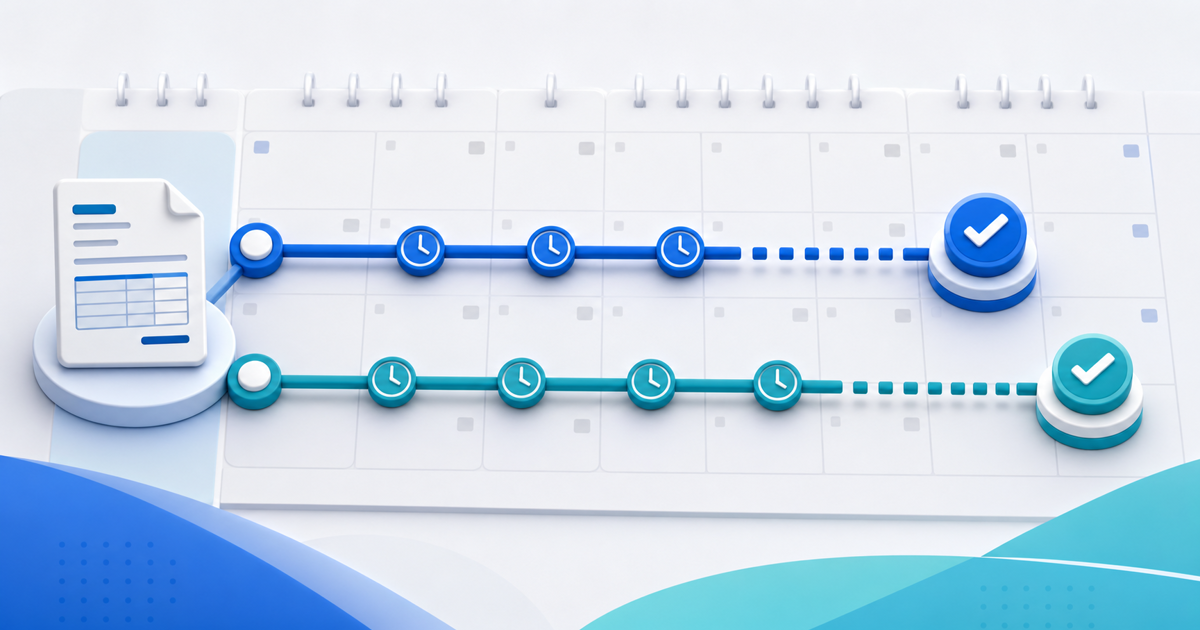
Net 15 gives a customer 15 days to pay an invoice; Net 30 gives 30 days. Choose Net 15 when faster cash recovery matters and the buyer can approve quickly. Choose Net 30 when an established B2B customer has a longer accounts-payable cycle. In both cases, show the exact calendar due date so nobody has to interpret the term.
This comparison is for freelancers and small service businesses deciding which term to put on a customer invoice. It models the timing difference without pretending one term is universally best.
Net 15 vs Net 30
| Decision factor | Net 15 | Net 30 |
|---|---|---|
| Payment window | 15 days | 30 days |
| Seller cash exposure | Shorter | Longer |
| Buyer approval time | Less | More |
| Good starting fit | New-client invoices with simple approval | Established B2B customers and formal AP workflows |
| Main failure mode | Buyer cannot approve in time | Seller finances work for another 15 days |
“Net” refers to the full balance after agreed credits or adjustments. Define when the clock starts—commonly the invoice date—and whether the agreement uses calendar days. If the contract, purchase order and invoice disagree, clarify before relying on a calculated date.
The Cash-Flow Difference
Suppose a consultant sends four €2,000 invoices on the first day of a month. The total receivable is €8,000.
| Term | Stated due point | Receivable financed before that point |
|---|---|---|
| Net 15 | Day 15 | €8,000 for up to 15 days |
| Net 30 | Day 30 | €8,000 for up to 30 days |
Net 30 doubles the contractual waiting period in this example. If the business must pay contractors, software and tax reserves during that gap, the term affects working capital even when every customer pays on time.
This is timing math, not a forecast. Customers may pay early or late, and settlement can add processing time.
Choose Net 15 When
- the invoice is easy for one person to approve;
- you are working with a new client and want to limit credit exposure;
- the project is short and costs have already been incurred;
- the customer confirms 15 days fits its process;
- you send all required documentation immediately.
Net 15 is not useful when purchasing reliably takes three weeks. An unrealistic term creates predictable overdue invoices rather than faster payment.
Choose Net 30 When
- the customer has a documented AP cycle;
- several people must approve the invoice;
- the purchase order or agreement requires 30 days;
- the relationship justifies the additional credit period;
- your cash plan can absorb the timing.
Do not accept Net 30 automatically. Confirm the billing contact, invoice portal, PO requirement, acceptance evidence and start date.
A Four-Step Term Test
- Process: Can the buyer approve and schedule payment inside the window?
- Evidence: Can you submit the invoice, PO reference and acceptance record immediately?
- Exposure: Can your business carry the receivable until the due date?
- History: Has this customer paid reliably under comparable terms?
Use the shortest term that receives four credible “yes” answers. For a late-paying customer, changing “30” to “15” alone will not fix missing approvals or disputed scope.
Always Print the Exact Due Date
Write both the term and date:
> Payment terms: Net 15. Invoice issued 3 August 2026. Payment due 18 August 2026.
That is clearer than “Net 15” alone and gives reminder automation one unambiguous date. If local rules, a contract or customer policy uses a different counting method, calculate accordingly and state it.
For calendar days, weekends, discounts and other terms, see the invoice payment terms guide.
Make the Invoice Easy to Approve
- confirm the legal customer name and billing contact;
- collect the PO or cost-centre reference;
- describe accepted work in recognizable language;
- attach required evidence once;
- offer an authorized payment route;
- send a short reminder before the due date.
When overdue, separate administrative delay from a dispute. Ask what blocks approval and record the promised date. Interest and recovery rights vary. For EU business transactions, consult the European Commission’s late-payment guidance and obtain local advice before applying charges.
With PayRequest invoicing, issue a customer-specific invoice with a due date and online payment route. Pair it with payment reminders so follow-up follows the agreement. Choose the term, print the exact date and test the payment route before creating a free account.