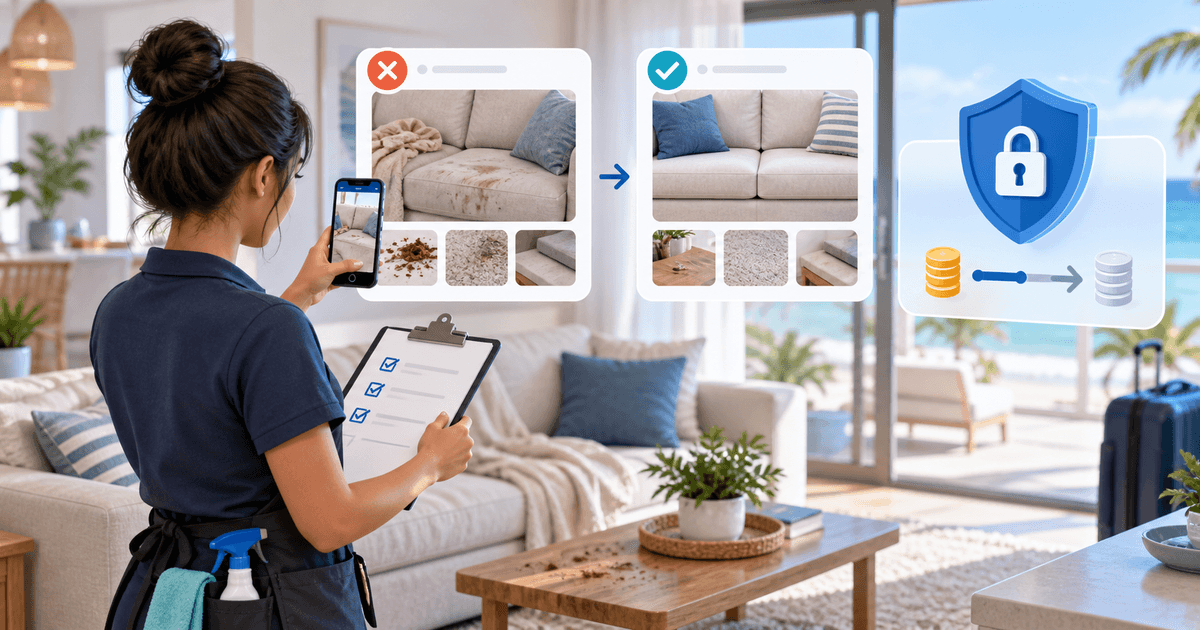
To review a vacation-rental cleaning charge against a security deposit, compare the check-in condition with the post-checkout inspection, document the work that exceeds the agreed standard and itemize the amount before deciding whether a supported capture is appropriate. A routine turnover clean is not the same evidence as extra cleaning caused by a guest.
This workflow is for direct-booking hosts and property managers. Platform rules differ: Airbnb says most hosts may not charge a traditional security deposit and that eligible software-connected hosts must disclose it properly. Treat platform policy, local law and your own rental agreement as separate checks.
Separate the Cleaning Fee From the Damage Hold
Show guests the normal cleaning fee and any refundable security authorization as different line items. The cleaning fee pays for the published turnover service. The hold is a conditional reserve for defined costs under the agreement. Do not convert an ordinary cleaner invoice into a deposit claim without comparing the promised condition and the actual exception.
Before arrival, record the property's baseline: room photos, high-risk surfaces, appliances, linens, keys, waste areas and any existing marks. At checkout, repeat the same views. A single close-up of a dirty surface without a room context or timestamp is weak evidence of when the condition occurred.
Use a Paired Cleaning Evidence Card
The following original card is designed for one property and one booking. Replace the fictional values with the records you actually keep.
| Checkpoint | Record | Decision question |
|---|---|---|
| Arrival baseline | Wide room views, existing stains, inventory and date | Was the condition already present? |
| Published standard | Agreement, house rules and disclosed cleaning fee | What was the guest asked to leave? |
| Checkout inspection | Timestamped views, cleaner notes and missing items | What changed after the stay? |
| Extra work | Task, time, invoice or rate and affected area | Is this beyond routine turnover? |
| Deposit outcome | Release, itemized supported capture or open review | Can each amount be explained separately? |
For a fictional €300 authorization, a cleaner reports an extra €48 deep-clean after a documented spill and the normal turnover remains €95. The correct record is not “€143 taken from the deposit” unless the terms and evidence support that action. Keep the €95 routine service separate, explain the €48 line and release any unused authorization through the supported provider route.
Connect Inspection to the Payment Record
Use PayRequest security deposits for the authorization workflow and keep the booking reference beside the deposit reference. After checkout, attach the condition record, itemized task, applicable term and customer message to your own operational record. PayRequest can support the authorization, capture or release path; it does not decide whether cleaning is chargeable or replace your rental agreement.
If the booking came through Airbnb, follow Airbnb's current security-deposit and reimbursement guidance instead of assuming that a direct-booking hold can be used on the platform. For a direct booking, use the terms and provider workflow that actually govern that reservation.
Do not call a released authorization a refund. Do not promise when the guest's bank will display available funds. If the evidence is incomplete, keep the decision open and request the missing report rather than taking the whole available amount.
Review the Claim Before You Capture
Ask five questions:
- Was the cleaning expectation disclosed before payment?
- Does the check-in record show the starting condition?
- Does the checkout record identify what changed and when?
- Is the extra task distinct from ordinary turnover, with a defensible amount?
- Does the provider and booking channel support the intended action?
If any answer is no, pause the capture and resolve the evidence or customer communication first. A card authorization is not permission to charge an arbitrary amount, and a photo does not guarantee a successful dispute outcome.
Review current pricing before building the margin model. Begin with one property, one paired inspection card and one clear message for release or itemized review. That operational discipline is the differentiator: the payment action follows a documented decision instead of standing in for one.
Editorial note: AI assisted with this article and illustrative cover. Airbnb's current public guidance and PayRequest's security-deposit destination were reviewed; the evidence card and €300/€48 example are original illustrations, not legal advice or a completed charge test.