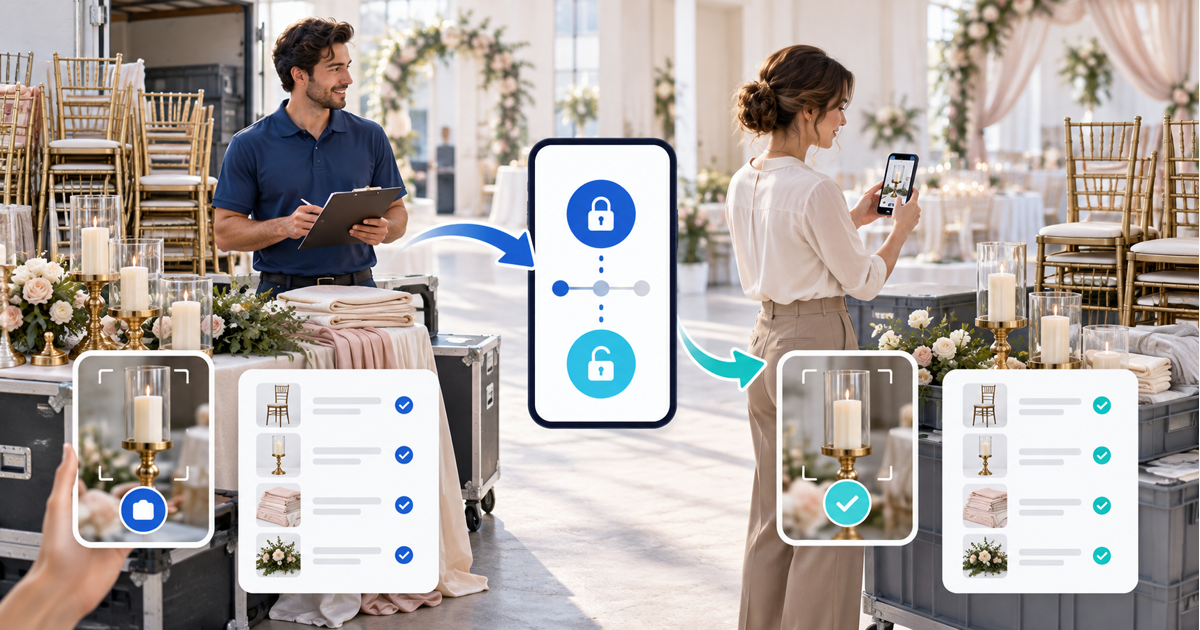
A wedding-decor rental security deposit should protect clearly identified items during custody, not quietly absorb the booking fee, setup labour or ordinary consumable use. The useful workflow is to separate booking money from the refundable protection, record condition at handover and return, then release or capture only the supported, disclosed amount.
This guide is for small rental teams supplying arches, candle holders, linens, signage, table pieces and other wedding decor. Existing party-rental pages cover broader event equipment; this article focuses on the decor-specific evidence problem: many small items, styling changes and a short venue handover window.
Keep booking, balance and protection separate
Name each money purpose before creating a payment route. A booking payment can reserve labour or inventory under the contract. A final balance can settle the rental price. A security-deposit authorization or payment protects defined custody risks. The exact mechanic and refund rules depend on provider support and local law.
| Money item | Purpose | Evidence to keep |
|---|---|---|
| Booking payment | Reserve date and agreed service | Signed scope and date |
| Rental balance | Settle the stated hire price | Final order version |
| Security deposit | Cover defined damage or loss risk | Itemized condition record |
| Extra charge | Approved change or supported deduction | Approval and calculation |
Do not invent a universal deposit percentage. A fictional €900 decor order with a €250 protection amount is only a worked example of separating records, not a recommendation.
Create a decor handover card
Group the inventory into repeatable zones: structures, fabrics, table decor, fragile pieces and accessories. For every zone, record quantity, identifier where useful, condition, photo reference, handover time and the person responsible. “Looks fine” is not a reproducible return record.
At dispatch or venue setup, note existing marks, missing components, candle-wax residue, stains, chips, bent frames and packaging condition. At return, use the same order and compare like with like. Record ordinary wear separately from new damage and from items that were not returned. If a venue or planner changes the layout, keep that operational fact in the event record rather than treating every difference as customer damage.
Choose authorization or collected deposit deliberately
A card authorization is not the same as collecting a refundable payment. A hold may have provider, card-network, account and timing constraints; a collected deposit may require a later refund and a clear reconciliation record. PayRequest's security-deposit feature supports the product workflow, but you must verify the connected provider's actual behavior before promising a hold duration, capture rule or release timing.
Before handover, confirm the customer-facing terms, supported provider path, amount, currency, expiry or refund route and who can approve a capture. A deposit does not automatically make an unsupported deduction lawful or fair.
Run the return decision with evidence
Use the same decision sequence after the event:
- Identify the order, customer and custody window.
- Compare the dispatch and return records by item or zone.
- Separate ordinary wear, missing items and new damage.
- Price only a supported, disclosed exception and retain the calculation.
- Release the unaffected amount or request the appropriate refund.
- Send an itemized explanation and keep the provider reference.
For the fictional €250 amount, a €40 documented replacement component would leave €210 to release or refund under the agreed process. It is arithmetic, not a legal entitlement or pricing rule. Do not capture because a photo is unclear, a flower wilted naturally or a styling choice changed without evidence of a defined loss.
Configure the PayRequest workflow
Create the booking and rental payment route with PayRequest payment links, then use security deposits where the connected provider supports the intended authorization or deposit process. Keep the inventory and condition card in your operating records. Review pricing: the Free plan has no monthly charge and PayRequest charges 2% per successful payment, capped at €25 per transaction; provider fees remain separate.
Test one complete draft flow on mobile: booking payment, deposit explanation, handover record, return comparison and release or capture decision. Do not call a draft or screenshot a successful live authorization. State the actual provider, timing and refund conditions in the customer terms.
Measure evidence completeness, on-time releases, disputed deductions, missing-item rate and time from return to resolution. A higher deposit amount is not proof of a safer rental business; clear scope and repeatable evidence are more useful controls.
Editorial note: AI assisted with this article and its illustrative cover. The five-zone handover card, six-step return sequence and €250 arithmetic are original planning tools; no live authorization, capture, refund, legal result or customer outcome is claimed.