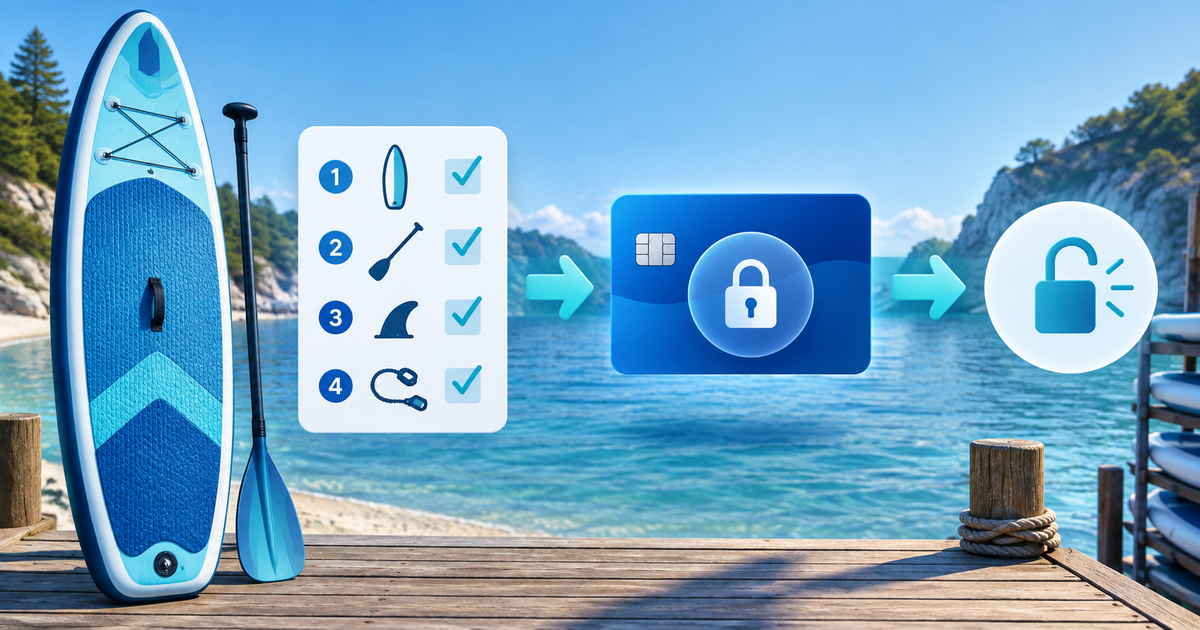
A paddleboard rental security deposit should be a separate, clearly explained card authorization—not an unexplained extra rental charge. Link the authorization to the board, paddle, fin, leash and booking, then compare departure and return evidence before releasing the hold or reviewing a supported capture.
This workflow is for SUP and stand-up paddleboard operators. A paddleboard rental agreement can require a refundable deposit and waiver, but local contracts and safety rules differ. Publish your own amount, inspection standard, cancellation terms and claim route before accepting a booking.
Separate the Booking Payment From the Damage Hold
Show the customer two amounts: the price of the rental and the refundable security deposit. A €65 day rental plus a €250 hold is not €315 of revenue. The first pays for the booking; the second reserves funds for defined post-rental costs under the agreed terms.
Set the amount from the equipment actually handed over and the risk you can document. Do not copy a €250 example as a universal recommendation. Record board ID, accessories, customer, booking dates, currency and authorization status in the same custody record.
Inspect the Four SUP Zones at Handover
Use the same checklist at departure and return. Record board identity and visible condition, then inspect the equipment customers often forget:
- Board skin, rails, handles, valve and inflation state
- Fin, fin box and leash attachment
- Paddle shaft, blade, adjustment and spare parts
- Personal flotation equipment and transport accessories
Take wide photographs that identify the board and close photographs of existing marks. Note whether the board is dry or wet, inflated or deflated, and whether every accessory is present. A signature confirms that a record was shown; it does not turn an unclear photograph into proof of a later charge.
Authorize, Release or Capture With Evidence
Use PayRequest security deposits to send a hosted authorization link and keep the deposit separate from the rental payment. The operator still decides the contractual amount and inspects the gear. PayRequest's workflow can record the authorization, supported capture or release; it does not decide whether a scratch is chargeable or replace your rental agreement.
After return, compare the departure and return cards before taking action. If the equipment is complete and the condition matches, release the unused authorization and tell the customer that the merchant action is complete. Do not promise the exact time their bank will show available funds again.
If damage or a missing accessory is documented, separate the evidence from the amount calculation. Record the board ID, photographs, inspection time, applicable term, repair estimate or published tariff, and the amount you intend to review. Capture only through the supported provider route and notify the customer; an available hold is not permission to charge an arbitrary amount.
The SUP Custody Card
| Checkpoint | Record | Owner action |
|---|---|---|
| Booking | Board ID, dates, rental price, deposit and terms | Confirm both amounts before checkout |
| Departure | Photos, inflation, fin, leash, paddle and PFD | Customer and operator acknowledge condition |
| Return | Time, location, photos and accessory count | Compare with departure record |
| Decision | Clean return, documented damage or missing item | Release or review a supported capture |
| Customer message | Amount, status, reference and next step | Never call a release a refund |
For a fictional booking, board SUP-014 has a €250 authorization. The return check finds no new damage, so the correct record is “€250 authorization released”; it is not “€250 refunded.” If a €42 accessory claim is supported under the agreement, record that review separately and do not describe it as the entire deposit being captured.
Handle Weather, No-Shows and Late Returns Separately
Weather cancellation, a no-show and late return are different operational events. Apply the published booking terms, record the actual handover status and stop staff from treating an uncollected board as a damage return. If the authorization is approaching a provider limit, do not create a fresh hold merely to extend it without a documented customer and provider process.
The rental hold and release guide explains why merchant release and bank display are different. For broader operational design, use the equipment-rental inspection checklist.
Start with one board category, one custody card and one responsible reviewer. Then create the deposit flow in PayRequest security deposits and check current pricing. A clear record protects both the operator and the renter without suggesting that a card hold replaces a contract, waiver or safety procedure.
Editorial note: AI assisted with this article and illustrative cover. The linked agreement is an example of rental terms, not a universal rule; the SUP custody card and €250/€42 example are original illustrations. No live authorization, capture or release was executed.