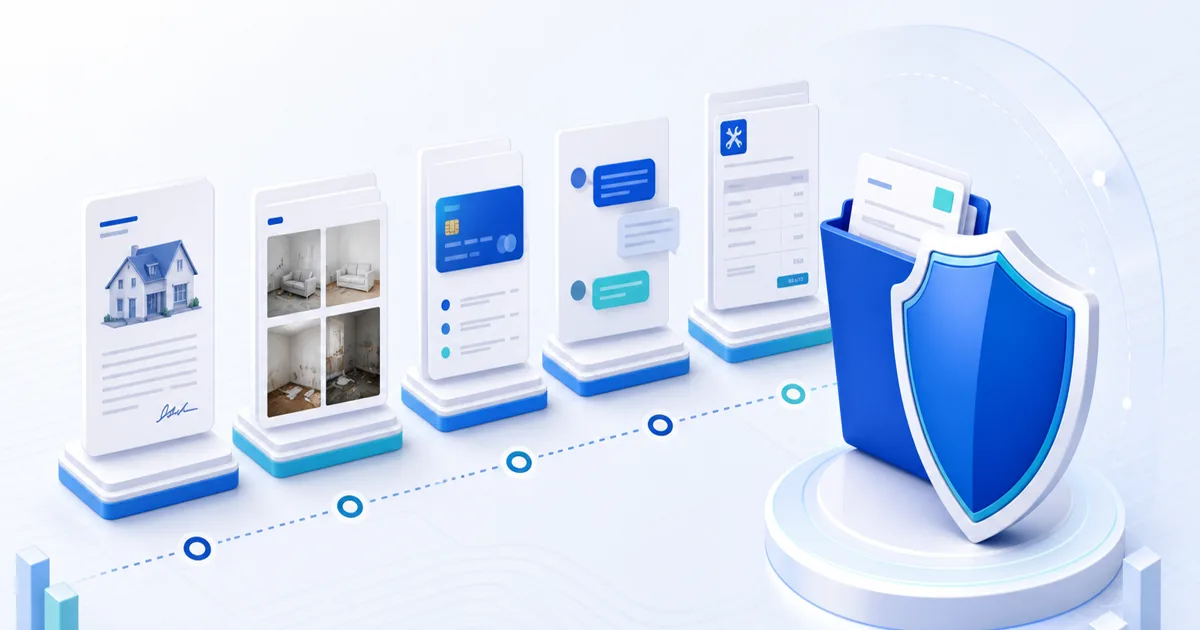
A rental security-deposit chargeback response should be a short chronological evidence packet, not a folder of unexplained screenshots. Connect the customer's agreement, authorization, asset condition, itemized charge and communications to the exact disputed transaction and reason code.
Winning is never guaranteed. The issuer or network reviews the submitted material under the applicable dispute rules, and a valid customer claim should be accepted rather than obscured.
The Seven-Part Evidence Packet
| Order | Evidence | Question it answers |
|---|---|---|
| 1 | One-page timeline and disputed amount | What happened, when and for how much? |
| 2 | Signed agreement and accepted deposit terms | What did the customer agree to? |
| 3 | Authorization and capture records | Which card event is being disputed? |
| 4 | Pickup/check-in condition | What was the starting condition? |
| 5 | Return/checkout condition | What changed during this rental? |
| 6 | Itemized calculation | How was the captured amount derived? |
| 7 | Customer notice and replies | Was the charge explained and addressed? |
Visa's chargeback overview notes that merchants may respond with supporting evidence such as receipts and customer communications. Stripe's evidence guidance recommends presenting evidence chronologically and explaining what each image demonstrates. Your own acquirer or provider supplies the actual deadline, fields and reason-code requirements.
Page 1: Write a Neutral Timeline
Open with identifiers, not argument:
- merchant, customer and booking reference;
- asset or property identifier;
- rental and inspection dates;
- authorized, captured, released and disputed amounts;
- transaction and provider references;
- dispute reason as supplied by the provider;
- one-sentence requested outcome.
Then list six to ten dated events. For example: terms accepted, authorization completed, asset handed over, return inspected, evidence sent, €85 captured and €415 released, customer replied, dispute received.
Page 2: Show Agreement and Disclosure
Extract only the relevant signed or accepted pages. Highlight the deposit amount, permitted capture categories, inspection process, calculation method and customer acknowledgment. Include evidence that this version was presented before authorization.
A policy written after the rental or a generic website page with no acceptance trail is not equivalent to the customer's agreement. Do not overstate what a signature covers.
Pages 3–4: Connect the Payment Events
Show the authorization ID, amount, currency, date and status, followed by the capture record and any released remainder. Make the merchant descriptor recognizable and identify the transaction that matches the issuer's dispute.
Separate a deposit authorization from the later captured charge. If the complaint is actually “credit not processed,” include the provider's release or refund record and date rather than submitting unrelated damage photos.
Pages 5–7: Prove the Condition Change
Pair pickup and return evidence in the same order and from comparable angles. Use wide images to identify the asset, then close-ups for the issue. Add inspection reports, mileage, access logs or handover signatures when relevant.
Label every image with date, source and what it shows. Never edit the substance of an image. Cropping for legibility should not remove context, and any annotation must remain obviously separate from the original evidence.
Page 8: Itemize the Amount
Tie every captured euro to an invoice, estimate or disclosed tariff. Show depreciation or previous wear where it affects the calculation. If only €85 is supported from a €500 hold, the packet should show both the €85 capture and the €415 release.
Mastercard's current merchant chargeback guide contains transaction-specific requirements, including rental categories and documentation for loss, theft or damage. Use the guide supplied by your acquirer for the exact network, region and reason code rather than copying a generic checklist blindly.
Final Pages: Customer Communication
Include the initial deposit explanation, authorization confirmation, itemized notice, customer's relevant reply and your response. Remove unrelated personal data, internal commentary and other customers' information.
If the customer raised a credible error—wrong asset, pre-existing damage, duplicate amount or promised refund—investigate it before contesting. Accepting a valid dispute can be more appropriate than submitting volume without relevance.
Evidence Quality Red Flags
- screenshots with no visible booking or transaction reference;
- close-ups that do not identify the rented asset;
- inconsistent dates, amounts or currencies;
- illegible full-page screenshots shrunk into a PDF;
- policy text without proof of pre-transaction acceptance;
- an estimate that does not match the captured amount;
- emotional commentary or claims not supported by the attachments;
- missing record of the unused deposit being released.
Build the Packet Before a Dispute Arrives
PayRequest security deposits can provide the payment timeline for a hosted deposit request, authorization and later release or capture. It does not create the rental agreement or inspection proof for you. Connect the payment record to your condition reports and customer messages from the start.
Store the packet by booking, not by dispute. Then a response deadline becomes an export-and-review task instead of a reconstruction exercise.