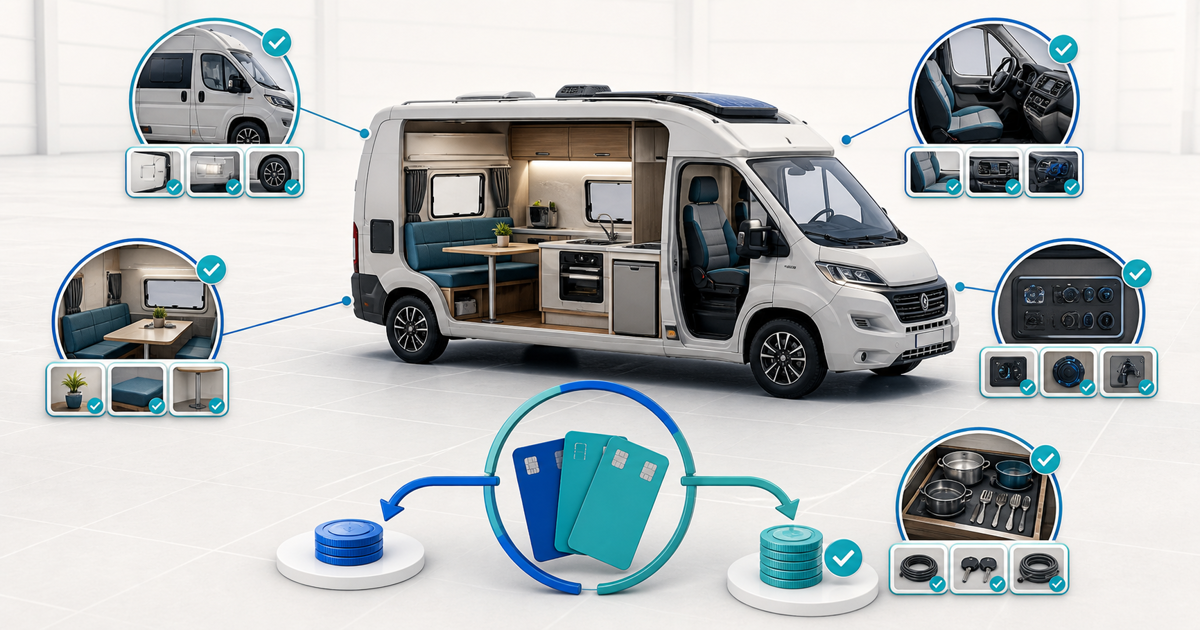
A campervan security-deposit decision needs more than exterior photographs. Pair the same vehicle, living-area systems, inventory, fuel and consumables at handover and return, then connect every proposed capture to a changed condition, an agreed term and an itemized amount. Keep roadworthiness and gas/electrical safety checks separate from financial evidence.
This guide is for campervan and motorhome rental operators. Its original asset is a five-zone handover-to-capture ledger designed around the equipment ordinary car checklists omit.
Build a Five-Zone Record
| Zone | Record at handover and return | Common exception |
|---|---|---|
| Vehicle exterior | All sides, roof access items, awning, mirrors, glass | New impact or missing cap |
| Cab and driving | Mileage, fuel, warning display, keys, controls | Fuel shortage or missing key |
| Living area | Upholstery, beds, doors, windows, blinds | Tear or broken fitting |
| Utilities | Hook-up cable, leisure battery display, water and toilet state | Missing cable or prohibited contamination |
| Inventory | Kitchen kit, tables, chairs, adapters and optional equipment | Counted missing item |
Use a fixed photo sequence with the vehicle registration or fleet ID visible in the first frame. Record timestamps, operator, renter and custody boundary. Repeat the sequence before cleaning or restocking changes the evidence.
Separate Safety From Deposit Evidence
A return checklist can identify a warning light, damaged cable or smell that requires isolation and qualified inspection. It cannot declare a campervan safe, determine gas tightness or substitute for manufacturer, maintenance, insurance and jurisdictional requirements.
Classify an issue first: changed cosmetic condition, missing inventory, consumable shortage, cleanliness exception, reported incident, or technical/safety referral. Only the first five may lead to a financial review under the agreement; a technical referral needs competent diagnosis before cost or responsibility is assigned.
Record Consumables With Units
“Not returned full” is too vague. Photograph the fuel gauge, record mileage and use the contract's stated refuelling method. For fresh water, waste water, toilet cassette and gas bottles, state the expected return condition before departure and record the observed state without unsafe improvisation.
Do not charge a generic cleaning penalty for ordinary turnaround work already included in the rental price. Define exceptional cleaning conditions and document the extra work or supplier cost. Local consumer and contract rules vary; obtain qualified advice for terms, deductions and taxes in every market you serve.
Set the Card-Hold Timeline
A security deposit placed as a card authorization is not the same as a completed payment. Show the amount, authorization date, inspection window and expected release path before the renter approves the hold. Card and provider time limits apply even when your rental agreement gives a longer investigation window.
Visa's current public rules allow estimated authorizations for vehicle-rental merchants under applicable conditions. Provider, network, card type and merchant category rules differ, so use the deadline shown by your payment provider rather than copying a duration from another rental company.
Create the PayRequest security deposit against the booking and fleet ID. At return, release it promptly when the record reconciles. When an agreed cost is supported, capture only that amount where the flow permits partial capture and release the remainder.
Use the Capture Decision Card
For every exception, complete one row before taking money:
| Required field | Example |
|---|---|
| Asset and zone | Hook-up cable, utilities |
| Handover state | Present; serial photographed |
| Return state | Missing |
| Agreement term | Replacement of missing supplied equipment |
| Evidence | Paired inventory frames and signed return note |
| Amount | Like-for-like replacement invoice, €48 |
| Decision | Partial capture €48; release remainder |
Do not bundle unrelated exceptions into “damage.” Send the renter the changed condition, relevant term, calculation and response route before or alongside the action required by your process. Preserve original files, not only compressed chat images.
Run a Counter-to-Counter Test
Before using the workflow with customers, stage one complete rental with staff: authorization, departure record, return record, clean return and release. Repeat with one missing low-value item and confirm the partial-capture record and customer message agree.
Pair this workflow with the general rental deposit hold and release guide and deposit chargeback evidence checklist. Launch when a reviewer can reconstruct custody, change, cost and payment action without relying on memory.