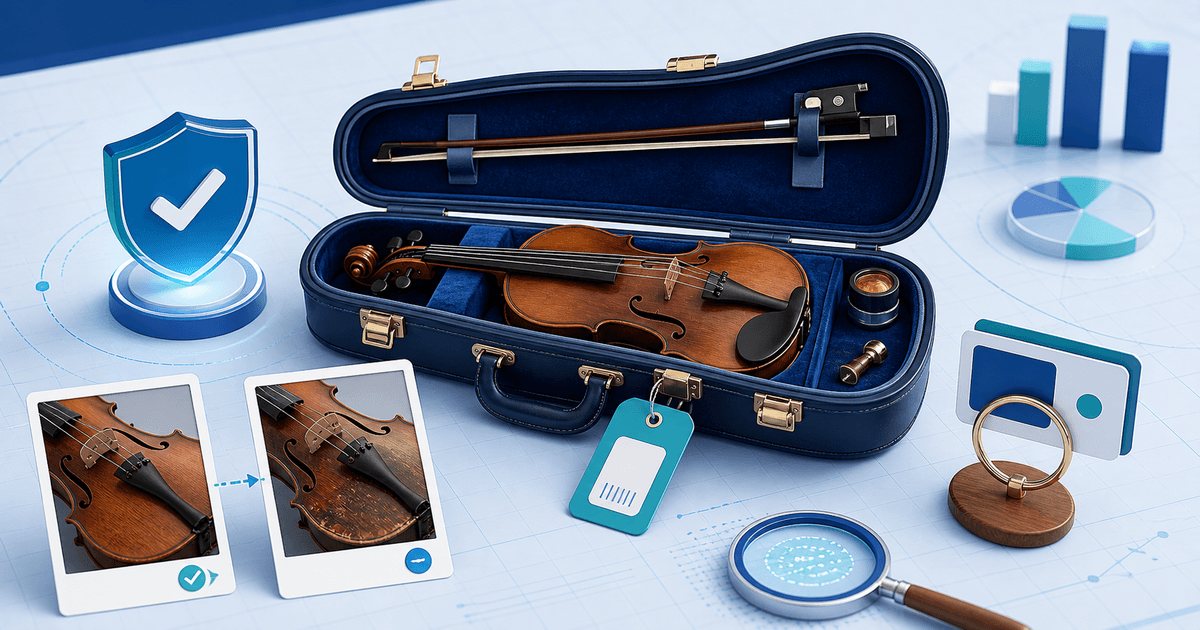
A musical-instrument rental deposit should be decided from a paired custody record: the same serialized instrument, case, bow, mouthpiece, stand or other accessories documented at handover and return. Release the hold when the set returns in the agreed condition; capture only a contractually supported, itemized amount tied to new damage, loss or late return.
This checklist is for music schools, repair shops and independent rental fleets. Its original asset is an instrument-family condition ledger that separates ordinary maintenance from evidence of a chargeable exception.
Use One Paired Instrument Ledger
| Field | Handover record | Return record | Decision use |
|---|---|---|---|
| Identity | Make, model, serial and asset tag | Same identifiers visible | Prevents a wrong-instrument claim |
| Complete set | Instrument, case and named extras | Item-by-item count | Supports a missing-component decision |
| Body condition | Repeatable wide and close photos | Same angles and lighting | Separates old marks from new damage |
| Functional baseline | Family-specific mechanism test | Same test before service | Separates failure from appearance |
| Consumables | String, reed, pad or bow-hair state | State plus wear rule | Keeps routine use out of damage claims |
| Deposit status | Amount, reference and expiry | Release or capture | Reconciles evidence to the card action |
Current terms vary materially. Surrey Arts distinguishes condition, missing cases and non-return. A 2026 OHMI agreement uses its own deposit and late-return rules. These examples show why operators need disclosed terms; they are not universal legal standards.
Separate Rent, Deposit and Maintenance
Rent pays for use. A card pre-authorization reserves capacity for defined exceptions but is not revenue or a completed charge. A maintenance plan may cover servicing, but it should not be silently duplicated in the deposit.
Before authorization, state the amount, hold window, covered events, inspection deadline and evidence route. School-term rentals can outlast authorization windows, so check the connected provider's current rules rather than promising that one hold lasts all year.
Inspect Family-Specific Zones
For a violin, record top, back, ribs, bridge, pegs, fingerboard, chin rest, bow and case. For brass or woodwind, record body sections, keys or valves, bell, mouthpiece and case. For a keyboard or amplifier, include ports, controls, power supply and a short functional test.
Show the serial number in the first wide frame and repeat angles at return. Do not diagnose a hidden repair from a photograph. Preserve the return state and obtain a written technician assessment before cleaning or repair changes the evidence.
Distinguish Wear, Service and Damage
Normal string, reed or bow-hair consumption may be expected. A cracked body, bent key, missing mouthpiece, liquid damage or substituted case is different. Publish which consumables the renter replaces and which routine service rent includes.
Classify each exception as pre-existing, ordinary wear, routine service, approved repair, new damage, missing component, late return or total loss. This keeps the deposit from becoming a general maintenance fund.
Decide, Notify and Close
Choose one outcome: release, extend review only when provider rules permit, partially capture an itemized amount, or capture the supported full amount. Send the serial number, paired evidence, applicable term, repair or replacement calculation and remaining release.
PayRequest security deposits can keep authorization status, countdown and release or capture visible. Pair that payment record with the ledger; a dashboard does not replace inspection evidence.
Record decision time, operator, provider reference and notice. Return the instrument to inventory only after the count and functional test pass. Review recurring repairs by family so future deposit terms use fleet evidence, not an arbitrary percentage.