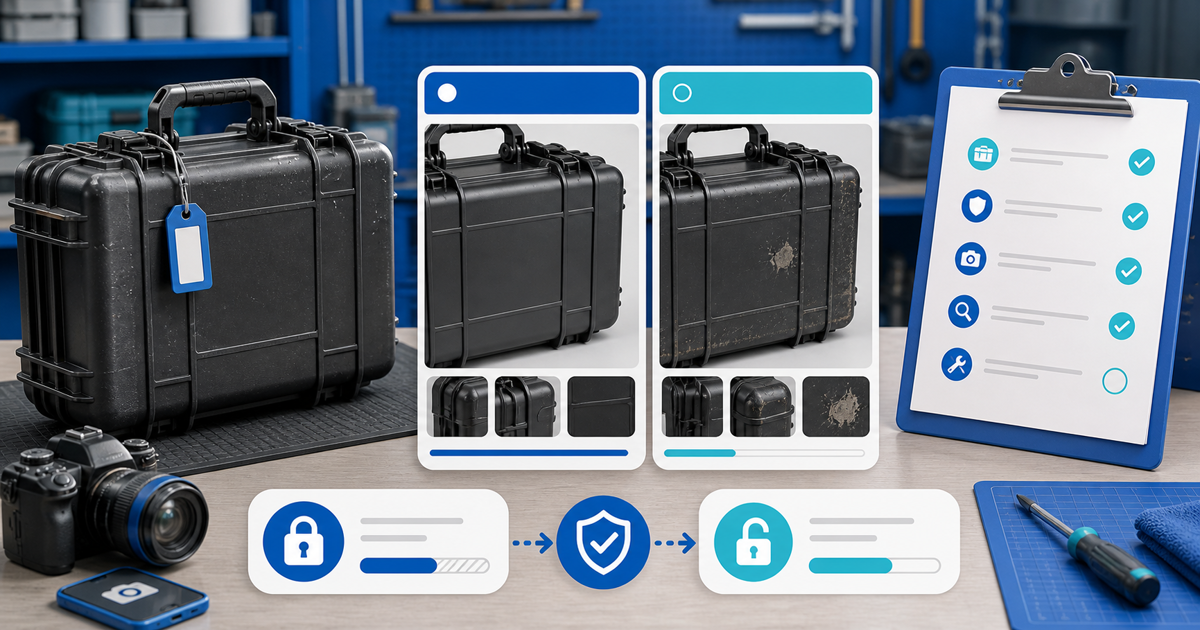
An equipment-rental inspection checklist should create two comparable records: one at dispatch and one at return. Use the same unit identifier, components, camera angles and functional checks in both records, then connect any supported deposit capture to the exact changed condition and itemized cost.
This workflow is for businesses renting tools, AV gear, sports equipment, machinery or event inventory. It is an operational evidence template, not a substitute for safety inspections, local rental law, insurance requirements or the signed agreement.
The Paired Inspection Record
Use one row per inspectable item and never overwrite the dispatch state:
| Field | Dispatch | Return |
|---|---|---|
| Unit ID / serial | EQ-204 / serial photo | Same unit verified |
| Body and frame | Pass; photos D01–D04 | New dent; photos R01–R04 |
| Controls and function | Pass; test clip D05 | Pass; test clip R05 |
| Meter / runtime | 1,842.3 hours | 1,851.1 hours |
| Fuel / charge | 100% | 42% |
| Accessories | Case, charger, 2 batteries | Charger missing |
| Customer acknowledgement | Date, name, method | Return time and receiver |
The value comes from pairing, not volume. Four consistent wide views plus detail photos usually explain more than 40 unlabeled close-ups.
Identify the Exact Asset First
Record business, booking reference, equipment type, manufacturer, model, asset number and serial number. Photograph the serial plate and a wide view in the same inspection set. For a kit, list every component with quantity and its own identifier where practical.
Do not reuse a generic “camera kit” checklist if the booking contains a specific body, two lenses, batteries and a charger. A deposit decision must point to the item that changed or did not return.
Run the Dispatch Inspection
Before handover:
- Photograph all sides in a defined order.
- Record existing scratches, dents, cracks and wear.
- Test controls, guards, cables, connectors, brakes or safety devices relevant to the asset.
- Record meters, fuel, charge and consumables.
- Count accessories and photograph the complete kit.
- Give the renter a copy or durable link and record acknowledgement.
Do not label a safety-critical item “pass” unless a qualified person performed the required check. Keep operational condition and cosmetic condition as separate fields.
Repeat the Same Return Sequence
At return, verify the identifier before photographing. Use the same order, distance and angles as dispatch. Record who received the asset, date and time, meter change, consumables, missing parts and functional test results.
If cleaning blocks inspection, record that condition and the disclosed follow-up window. Do not capture a deposit merely because the return photo set is incomplete.
Build a Capture Evidence Packet
When the return differs, assemble:
- the accepted agreement and applicable deposit clause;
- the paired dispatch and return rows;
- original, dated media with labels and asset context;
- an itemized estimate, invoice or disclosed tariff;
- customer notice describing the issue and calculation;
- the authorization, proposed capture and remainder-release timeline.
Separate damage, missing items, excess usage, fuel, cleaning and late return. Each category needs a contractual basis and calculation. A security deposit is not a pre-agreed penalty fund.
Decide Release, Partial Capture or Review
| Finding | Deposit action |
|---|---|
| No supported change | Release promptly |
| Supported cost below authorization | Capture the supported amount and release the remainder where the provider flow permits |
| Evidence or cost still incomplete | Follow the disclosed review process; do not invent a charge |
| Authorization expired | Do not present it as active; use only a lawful, agreed alternative route |
Authorization behavior and deadlines depend on the connected provider, card network and transaction. Stripe's official authorization guidance explains that validity windows vary and that an authorization can expire. Confirm the live status instead of relying on the date alone.
Connect the Inspection to the Payment Record
Create the deposit request with booking reference, asset summary, amount, currency and capture conditions. After authorization, store its reference beside the paired inspection record. At return, record the decision, evidence location, amount calculation and release or capture timestamp.
PayRequest security deposits supplies the hosted authorization and its release/capture audit trail. Your rental operation remains responsible for the agreement, safe inspection, evidence and validity of any claim.
Final Audit Test
Give the packet to a colleague who did not handle the rental. They should be able to answer: which asset, what changed, when it changed, which term applies, how the amount was calculated and what happened to the rest of the hold. If any answer depends on an unwritten explanation, the record is not ready.