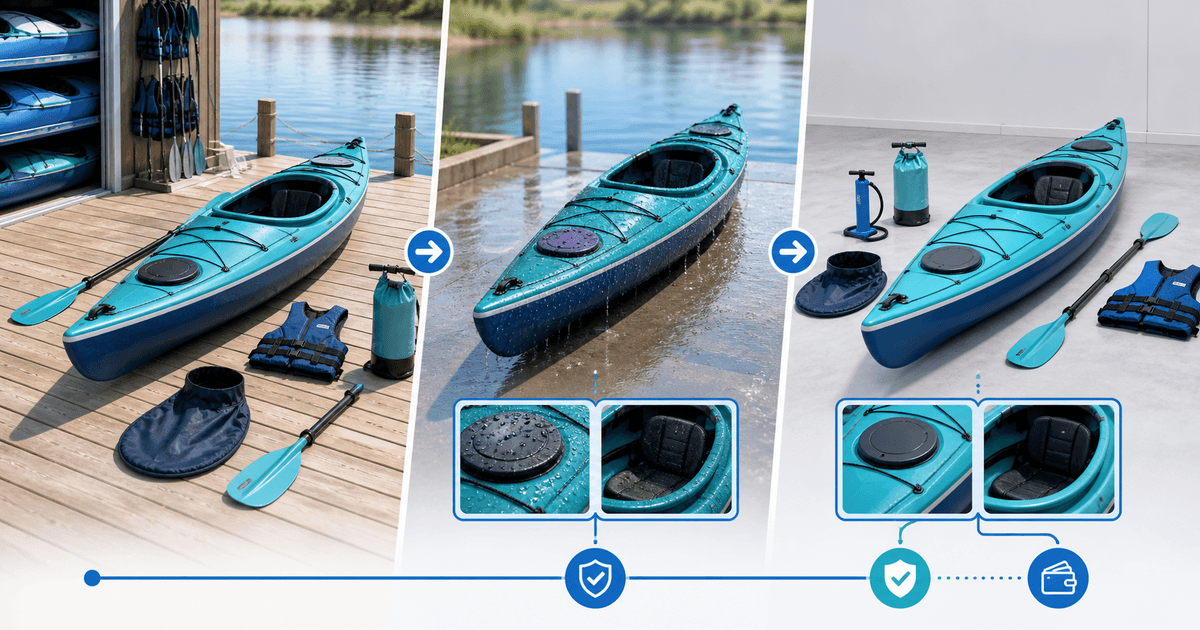
A kayak-rental deposit should connect one hull and equipment kit to paired dispatch-and-return evidence, then separate cosmetic wear, missing gear and safety inspection from the financial decision. A wet boat photographed from one angle cannot show whether damage is new, whether a hatch cover was returned or whether the authorization is still available.
This checklist is for kayak, canoe and paddle-sports rental operators. Its original asset is a dry-wet-dry custody card that creates comparable evidence without asking counter staff to make structural repairs or legal judgments.
Separate Rental, Authorization and Safety Decisions
The rental price pays for the agreed trip and time. A card pre-authorization temporarily reserves a disclosed amount for defined exceptions. Late return, recovery, cleaning, missing equipment and damage are separate categories only when the displayed terms make them so.
Show the hold amount, likely inspection window, permitted capture reasons and contact route before authorization. Network rules, provider timing and local rental law differ; adapt the agreement to your operation rather than copying this checklist as legal terms.
Use a Dry-Wet-Dry Custody Card
| Stage | Record | Why it matters |
|---|---|---|
| Dry dispatch | Hull ID, bow, stern, keel, sides, cockpit, hatches and fittings | Establishes readable baseline condition |
| Kit handover | Paddle, PFD, spray deck, pump, leash and dry bag by ID/count | Separates missing-item questions from hull condition |
| Wet return | Time, location, mud/sand, water ingress and immediately visible change | Preserves the handback state without pretending it is a final diagnosis |
| Dry inspection | Cleaned and dried paired views plus qualified follow-up where needed | Makes like-for-like comparison possible |
| Decision | Release, supported partial capture, further inspection or another authorized route | Connects evidence to one financial state |
Use the same angles and an item ID in every image. Record pre-existing scratches and repairs before handover. The National Marine Manufacturers Association's current canoe and kayak rental safety checklist illustrates why renter briefing and safety equipment belong in the operating workflow; it is not a damage-pricing schedule.
Inspect Without Hiding the Evidence
At return, first record the wet condition and kit count. Then follow the manufacturer's cleaning and drying instructions before the comparable dry inspection. Do not scrub, patch or discard an item before recording the original handback state.
Check the hull, keel and ends for a change in shape, deep impact, crack or abrasion; inspect seat, footrests, handles, deck lines, hatch rims and covers; and reconcile every assigned accessory. Escalate suspected structural damage or safety-critical failure to a qualified person. Counter staff should record symptoms, not declare a repair cause from a photograph.
Calculate a Supported Amount
Do not convert every mark into full replacement. Match the change to the displayed term and an itemized cleaning, repair or replacement basis. Separate routine wear, pre-existing condition, consumables and operator maintenance. If an estimate later changes, preserve both the estimate and final document.
| Return result | Financial action | Record |
|---|---|---|
| Matched condition and complete kit | Release promptly | Paired card and release confirmation |
| Missing accessory | Capture only a supported amount when permitted | Handover count, return count and replacement basis |
| Possible hull damage | Hold only within valid rules while qualified inspection occurs | Paired images, status, deadline and diagnosis |
| Supported repair below hold | Partial capture and release remainder | Clause, evidence, itemized amount and notice |
Connect the Hold to the Rental Record
PayRequest's equipment-rental security-deposit workflow can connect the customer, booking reference, authorization status, release and supported capture. The security-deposit feature overview explains the difference between holding and charging funds.
Before launch, stage four returns: a clean complete kit, a missing paddle, a muddy but undamaged hull and suspected structural damage. A second staff member should be able to reconstruct the identity, custody record, inspection state and financial decision without relying on memory.