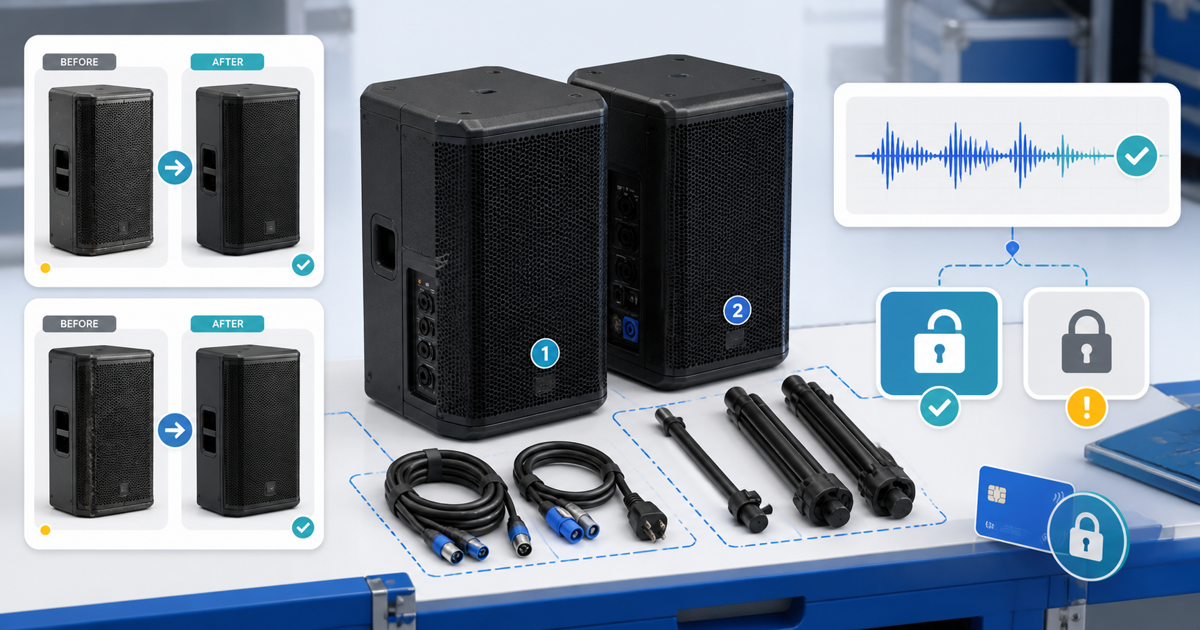
A PA-speaker rental deposit should identify each cabinet and accessory, compare dispatch and return condition and tie any capture to a documented change and itemized amount. A photograph of two black boxes is not enough: powered and passive speakers have different signal paths, and cables, poles, covers and controls can create separate loss questions.
This checklist is for small DJ, event and audio-equipment rental teams. Its original asset is a silent-to-signal custody card that records useful evidence without asking counter staff to diagnose electronics.
Separate Price, Authorization and Damage Decision
The rental price pays for agreed use. A card authorization reserves a disclosed amount temporarily. Delivery, setup, late return, cleaning and missing consumables are separate charges only when the agreement makes them so.
Before authorization, show the amount, expected hold period, inspection process, capture triggers and contact route. Card-network rules and local law vary; use terms appropriate to your market rather than copying this operational checklist into a contract.
Build the Silent-to-Signal Custody Card
| Stage | Dispatch evidence | Return comparison |
|---|---|---|
| Identity | Model, serial, asset tag and powered/passive type | Same cabinet and electronics module |
| Silent condition | Grille, handles, corners, feet, pole cup, sockets and controls | Paired views show any physical change |
| Accessories | Power/audio cables, covers, poles, adapters and count | Every assigned item is reconciled |
| Known-good signal | Named source, cable, channel and conservative level | Same short test produces comparable output |
| Indicators | Power, protect, limit or fault state at test level | New warning is recorded, not diagnosed at desk |
Photograph labels close enough to read and take consistent wide views. Store the booking reference, timestamps and names of the handover staff and renter with the card.
Use the Correct Signal Path
For a powered speaker, record the power lead, input used, gain position and known-good source. For a passive cabinet, record the amplifier and output channel used in the test. Never connect an amplifier output to a line-level input, and follow the manufacturer manual for impedance, cabling, ventilation and operating limits.
Run only a short, conservative functional check that your documented procedure and staff competence allow. JBL's current powered-speaker documentation distinguishes inputs, gain, limit indication and safe setup. Use the manual for the exact model; one manufacturer's controls are not a universal test standard.
Do Not Convert a Symptom Into Liability
A rattle, intermittent connector, protect light or loss of output is a symptom. Quarantine the cabinet and let a qualified technician identify cause, repair and whether normal wear, pre-existing condition or misuse is involved. Do not capture a deposit merely because the unit failed after return.
For a supported capture, preserve paired evidence, the exact item, observed change, relevant displayed term and itemized repair or replacement basis. Depreciation, tax and loss-of-use treatment can vary and need an appropriate policy.
Decide Release, Inspection or Capture
Use visible states: release after the matched check; keep under documented inspection only while the authorization remains valid; partially capture a supported amount; or capture up to the disclosed limit when the evidence and terms justify it. Notify the renter with the decision and evidence route.
PayRequest security deposits for equipment rentals can connect the authorization, status, release or supported capture to the booking reference. The broader security-deposit workflow explains how a hold differs from a charge.
Before launch, stage five returns: clean kit, missing cable, new grille dent, protect warning and wrong serial number. Another staff member should be able to reconstruct the item, test, decision and amount without relying on memory.