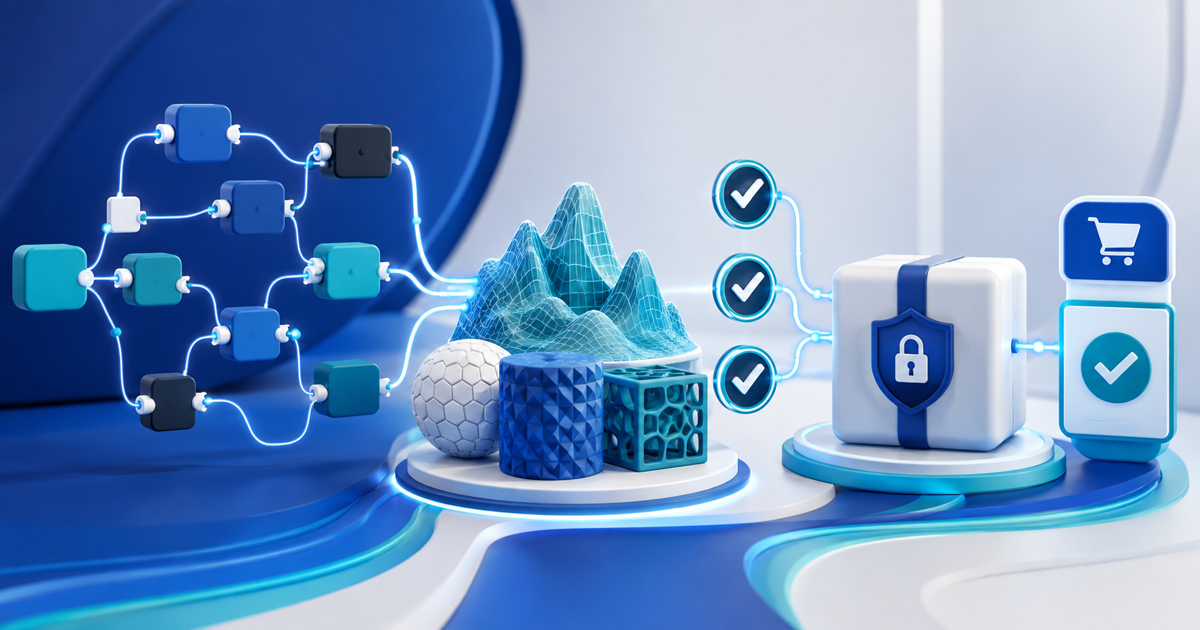
Sell a Blender Geometry Nodes pack only when a buyer can add the node group to a clean file, understand every exposed input and reproduce the promised output in the Blender versions you list. A beautiful render does not prove that the reusable node asset is organized, portable or safe to use in production.
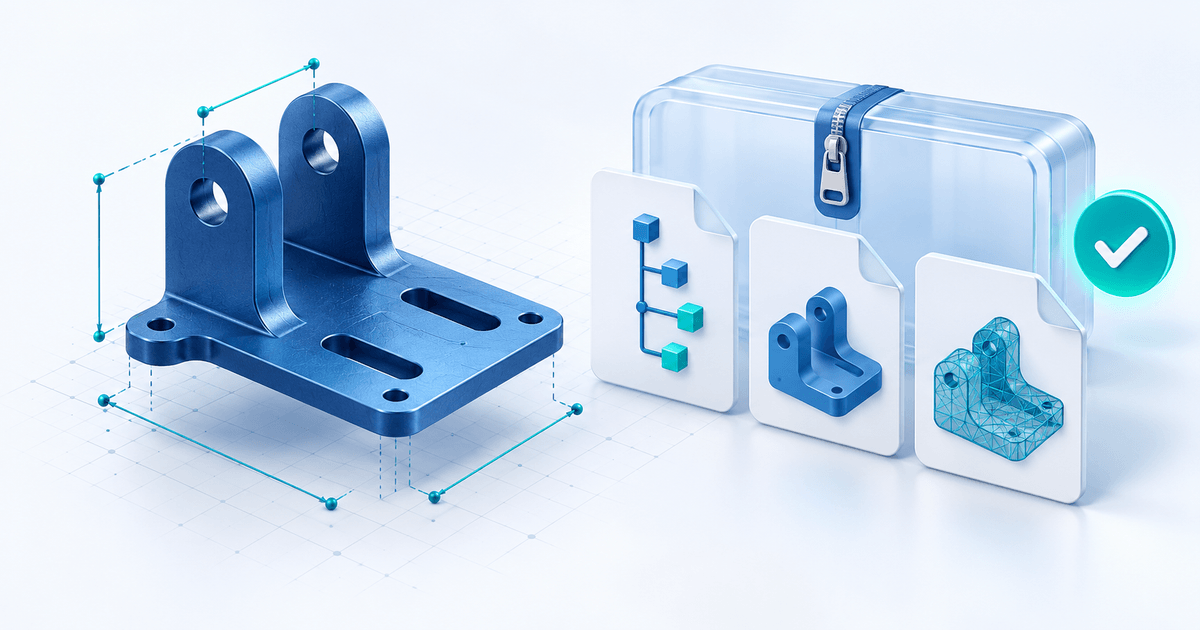
This checklist is for artists selling node groups and node-based tools they created and have the right to distribute. Its original asset is a four-scene compatibility matrix that tests import, controls, scale and stress behavior from the exact buyer archive.
Choose the Deliverable Before the License
Separate four possible products: a node group, a node-based tool, a demonstration scene and a Python add-on. They do not create the same buyer job or licensing questions.
Blender's manual explains that a Geometry Nodes tree connected to a modifier is a node group. It also documents that a node-based tool can be marked as an asset and the .blend file saved as an asset bundle. Use the format that matches the promise, and label demo scenes as examples rather than required hidden dependencies.
Blender itself is GPL-licensed, but that does not make every artistic output or data file automatically GPL. Python add-ons that use Blender's API require separate attention; Blender's official license explanation says published add-on scripts must use a GPL-compatible license. If the pack mixes node data, scripts or third-party assets, identify each component and obtain appropriate advice rather than applying one vague “commercial license” to everything.
Build a Four-Scene Compatibility Matrix
Test the exact retail archive in these scenes:
| Scene | Test input | Pass condition |
|---|---|---|
| Blank | New file with a basic mesh or curve | Asset imports without missing data |
| Realistic | Buyer-like object with expected scale | Defaults produce the advertised result |
| Boundary | Very small, large or low-density input | Controls fail predictably or remain usable |
| Stress | Dense input or high repeat count | Performance and memory limits are documented |
Run the matrix in every major Blender version you promise. Record version, operating system, renderer where relevant, scene seed or inputs, completion time and warnings. Do not call a version compatible because the file merely opens; the output and exposed controls must still behave as described.
Design the Buyer-Facing Interface
Expose only inputs the buyer needs. Give sockets meaningful names, stable defaults, sensible ranges and units. Group related controls and document whether values assume metres, object scale, applied transforms, named attributes, a particular material or a specific geometry type.
Add one resettable example for each major use case. Avoid baking the marketing render into the node group as unexplained supporting geometry. If a custom material, image, font or object collection is required, include it only when redistribution is allowed and list it in the manifest.
Clean the Retail Asset Bundle
Make a new file, append only the product assets and remove unused data blocks. Use a predictable catalog structure, a versioned filename and a start-here scene. Then inspect the archive for private paths, unrelated work, hidden external references and oversized caches.
The release manifest should state:
- Blender versions and operating systems tested;
- node group or tool names and supported object types;
- required render engine, materials, attributes and add-ons;
- included third-party components and their licenses;
- known scale, topology, performance and version limits;
- product version, archive checksum and support route.
Create Evidence Without Giving Away the Product
Show one interface overview, three materially different outputs and a short viewport capture of controls changing the result. Rendered images demonstrate visual range; the four-scene matrix demonstrates the editable asset. Keep both.
Do not promise “works with any mesh” unless the boundary and stress scenes support that claim. Prefer concrete conditions such as “tested on manifold meshes from 1–100 metres with applied scale.” Mark timings as measured examples, not universal performance guarantees.
Sell and Deliver the Approved Bundle
Create a 3D asset download product, state the exact Blender requirements and upload the versioned archive. Automatic file delivery can release the approved package after payment and keep the buyer order connected to the delivered file.
Make a buyer-view purchase, download into a clean folder and rerun the four scenes from that copy. Publish when the listing, manifest, screenshots and delivered archive all describe the same node version and license scope.