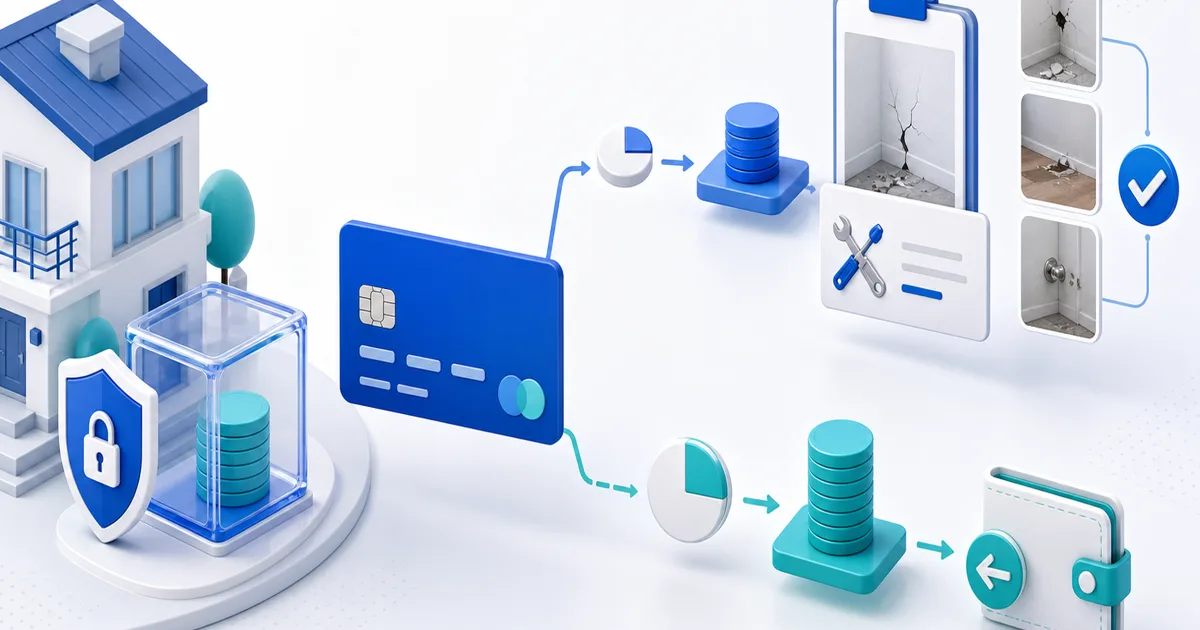
Open voor een gedeeltelijke borgafschrijving in PayRequest Security Deposits, klik op de onderstreepte klantnaam of View Deposit en kies Partial Capture op de detailpagina. Vul het onderbouwde bedrag in en controleer de bevestiging. In de huidige Stripe-borgflow schrijft de laatste Capture-actie dat bedrag af en geeft het restant vrij. Een tweede afschrijving op dezelfde autorisatie is niet mogelijk.
Een fictieve borg van €350 met €150 aan onderbouwde kosten eindigt dus als €150 afgeschreven en €200 vrijgegeven. Die €200 is geen saldo dat je later nog kunt innen. Bepaal het totaal vóór bevestiging.
Waar klik je na autorisatie?
- Open Security Deposits. Log in op het juiste bedrijfsaccount en open Security Deposits via payrequest.app/deposits.
- Open de klantnaam. Klik op de onderstreepte klantnaam of View Deposit. Controleer de boekingsreferentie, providerstatus en uiterste afschrijfdatum.
- Kies Partial Capture. Kies Partial Capture op de detailpagina. Vul het onderbouwde bedrag in en controleer wat wordt afgeschreven en vrijgegeven voordat je bevestigt.
- Controleer het eindresultaat. Bekijk na een geslaagde Stripe-afschrijving Captures en de eindstatus. Het ongebruikte bedrag wordt vrijgegeven en is niet meer beschikbaar voor een tweede afschrijving.
Vóór afschrijving: controleer boeking en bewijs
Controleer boekingsreferentie, klant, valuta, provider, autorisatiestatus en deadline. Koppel het voorgestelde bedrag aan de afspraken, inspectie en gespecificeerde kosten. Een reservering van €350 betekent niet dat je automatisch €350 mag afschrijven.
In dit fictieve voorbeeld onderbouwt de inspectie €100 voor een vervangend onderdeel en €50 aan afgesproken arbeid. Samen is dat €150. Het zijn voorbeeldbedragen, geen aanbevolen tarieven. Bewaar de toelichting en bewijsstukken en vertel de klant of de afschrijving nog voorgesteld of al uitgevoerd is.
Komen spullen op verschillende momenten terug, bekijk dan eerst het proces voor gedeeltelijke retouren. Schrijf niet alvast een klein bedrag af in de veronderstelling dat de rest gereserveerd blijft.
Wat gebeurt er met de resterende €200?
| Afrekening | Bedrag |
|---|---|
| Oorspronkelijke autorisatie | €350 |
| Definitieve gedeeltelijke afschrijving | €150 |
| Vrijgegeven reservering | €200 |
| Beschikbaar voor tweede Stripe-afschrijving | €0 |
De vrijgave van €200 is geen terugbetaling van een voltooide betaling: dat deel was nooit afgeschreven. De bank bepaalt wanneer en hoe de vrijgave zichtbaar wordt. Beloof geen onmiddellijk zichtbaar saldoherstel.
Stripe heeft een aparte multicapture-mogelijkheid voor geschikte betalingen, maar de huidige PayRequest-borgflow gebruikt een definitieve afschrijving. Algemene providerondersteuning bewijst niet dat die mogelijkheid voor deze borg beschikbaar is. Controleer bij andere providers de account- en betaalmethodevoorwaarden.
Stripe: authorization and capture · Mollie: holds and capture
Pending in PayRequest versus pending bij de bank
Pending in PayRequest betekent dat er nog geen bevestigde autorisatie beschikbaar is om af te schrijven. De vernieuwde interface maakt onderscheid tussen Waiting for customer, Processing authorization en Authorization attempt expired. Funds reserved is het duidelijkere label voor een geautoriseerde reservering.
Een bank kan een geslaagde kaartreservering ook als pending tonen. Dat banklabel betekent niet automatisch dat de PayRequest-autorisatie is mislukt. Gebruik de borgstatus in het dashboard en de deadline om te bepalen of afschrijving mogelijk is.
| PayRequest-status | Betekenis | Volgende stap |
|---|---|---|
| Pending / Waiting for customer | De autorisatie is nog niet bevestigd. | Laat de klant de beveiligde checkout afronden; afschrijven is nog niet mogelijk. |
| Processing authorization | De provider bevestigt de poging nog. | Wacht op bevestiging. Blijft dit zo, neem contact op met support met de borgreferentie. |
| Authorized / Funds reserved | De reservering is bevestigd. | Schrijf geheel of gedeeltelijk af, of geef vrij, vóór de getoonde deadline. |
| Captured / Partially captured | Er is een bedrag afgeschreven. | Controleer bij Stripe de afschrijving en het vrijgegeven restant; geen tweede afschrijving. |
| Released / Expired | De reservering is niet meer beschikbaar. | Niet meer afschrijven. Spreek zo nodig een nieuw verzoek af. |
| Authorization attempt expired | De checkoutpoging verliep zonder autorisatie. | Er is niets gereserveerd. Regel een nieuwe autorisatiepoging. |
Controleer de kosten vóór bevestiging
PayRequest rekent momenteel €0 platformkosten voor deze Stripe-borgafschrijving. Stripe houdt zijn verwerkingskosten in op het afgeschreven bedrag. Dit staat los van de standaard PayRequest-kosten voor gewone betalingen.
Voorbeeld: €350 geautoriseerd → €150 afgeschreven → €200 vrijgegeven. PayRequest-afschrijfkosten: €0. Netto-opbrengst: €150 min de werkelijke Stripe-kosten. Een eventueel abonnement staat hier los van.
Free omvat momenteel 1 actieve borg en 3 nieuwe borgverzoeken per maand. Onbeperkte borg vereist een geschikt Business- of Growth-abonnement. Bekijk je dashboard voor je limieten en eventuele bestaande accountafspraken.
Leid geen algemeen Stripe-tarief af uit één betaling. Gebruik de kostendetails van je eigen Stripe-account en transactie.
Als de afschrijfknop ontbreekt
Controleer of je het bedrijfsaccount van de borg gebruikt en open de borgdetailpagina, niet het klantprofiel. Een pending, verlopen, vrijgegeven of definitief afgeschreven Stripe-borg kun je niet afschrijven. Gedeeltelijk afschrijven moet ook zijn ingeschakeld voor de borgconfiguratie.
Heeft de klant de checkout afgerond maar blijft de status onduidelijk, neem dan contact op met support met de borgreferentie. Vraag geen kaartgegevens en laat de klant niet blind opnieuw betalen. Controleer bij een onzekere afschrijving eerst Captures en de Stripe-betaling.
Checklist vóór de laatste klik
- Juiste klant, bedrijfsaccount, boeking en valuta.
- Bevestigde autorisatie waarvan de deadline niet is verstreken.
- Totaalbedrag onderbouwd met afspraken en inspectiebewijs.
- Afschrijving en vrijgave afzonderlijk gecontroleerd.
- Providerkosten onderscheiden van platformkosten en abonnement.
- Eén definitieve Stripe-afschrijving begrepen vóór bevestiging.
Bekijk de security-depositpagina voor het overzicht of borg vragen met Stripe om te starten.
Redactionele toelichting: bijgewerkt op 12 september 2026 op basis van PayRequest-applicatiecode en providerdocumentatie. AI hielp bij de tekst. De demo en bedragen zijn fictief; er is geen live betalingstest of klantcase gepubliceerd.