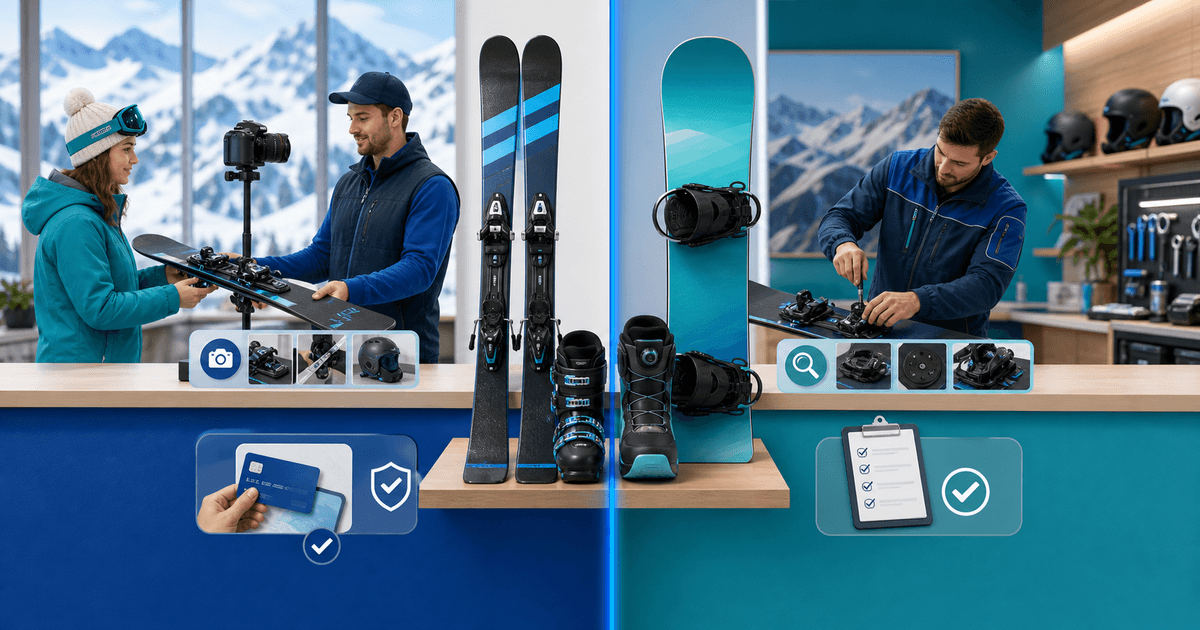
A ski or snowboard rental deposit should be decided from paired equipment evidence, while binding setup and safety inspection remain a separate qualified process. Record the same serialized skis, board, boots, poles and protective gear at handover and return; release the card hold when the kit passes, or capture only a supported, itemized amount under disclosed terms.
This checklist is for independent rental shops and resort operators. Its original asset is a two-lane return record that prevents cosmetic deposit evidence from being mistaken for a technical safety sign-off.
Keep Two Inspection Lanes
| Lane | Records | Decision |
|---|---|---|
| Deposit condition | Asset IDs, component count, repeatable photos, new loss or damage, itemized cost | Release or supported capture |
| Technical safety | Binding/boot compatibility, adjustment, functional test, service status, qualified technician | Return to service, quarantine or repair |
Never write “safe” on the deposit checklist merely because no new scratch is visible. Rental ski-binding-boot systems have their own technical inspection procedures. A published rental shop practice manual describes sampling, release-torque inspection and set-aside procedures; operators must follow current manufacturer instructions, applicable standards and qualified local practice.
Build One Kit-Level Custody Record
| Field | Handover | Return |
|---|---|---|
| Identity | Ski/board asset ID, boot pair IDs, pole or helmet IDs | Same identifiers confirmed |
| Completeness | Named components and quantity | Count plus missing items |
| Visible condition | Base, edges, topsheet, bindings, boot shells and buckles | Same zones and angles |
| Existing exceptions | Marked chip, repaired base, worn graphic | Change from baseline recorded |
| Deposit event | Amount, provider reference and expiry | Release or capture reference |
| Safety lane | Technician/status reference only | Quarantine or service result reference |
Photograph identifiers first, then wide and close views under repeatable light. Pair boots rather than recording only a model name. Count poles, removable straps and protective gear explicitly. A busy return desk is exactly where swapped sizes and incomplete kits become hard to reconstruct later.
Define Wear Before the Rental
Normal top-sheet marks and routine base service may arise from ordinary use. A missing ski, cracked boot shell, bent pole, broken buckle or deep impact damage can be a different category. Publish the distinction in the rental terms and avoid turning the deposit into a general maintenance budget.
Do not estimate repair costs from appearance alone when technical assessment is required. Quarantine the item, preserve the return condition and obtain the shop's documented repair or replacement basis. Separate optional damage waivers, rental price and refundable hold so the customer can understand each amount.
Work Within the Authorization Window
A pre-authorization reserves card capacity; it is not a completed charge or a refund waiting to happen. Before the hold, state its amount, covered events, inspection timing and expected release route. Multi-week or seasonal rentals can outlast provider authorization windows, so verify current connected-provider rules rather than promising one hold will remain available indefinitely.
At return, choose one status: release, documented review where the provider window permits, partial capture of an itemized amount or supported full capture. Send the customer the kit identity, before-and-after evidence, applicable term, calculation and remaining release.
Run the Deposit Record in PayRequest
PayRequest security deposits can keep a time-limited authorization, countdown and release or capture event visible. Attach the provider reference to the kit ledger, but keep detailed technical service records in the system used by qualified rental staff.
Use the broader equipment-rental inspection checklist for common custody fields. This ski-specific version adds paired boot identity and the hard boundary between financial evidence and binding safety work.
Close Both Lanes Before Re-Rental
Release the hold promptly when the custody check passes. Then confirm the separate technical lane permits the equipment to return to inventory. Record who made each decision and when. A released deposit does not certify equipment safety, and a repair requirement does not automatically justify charging the renter.