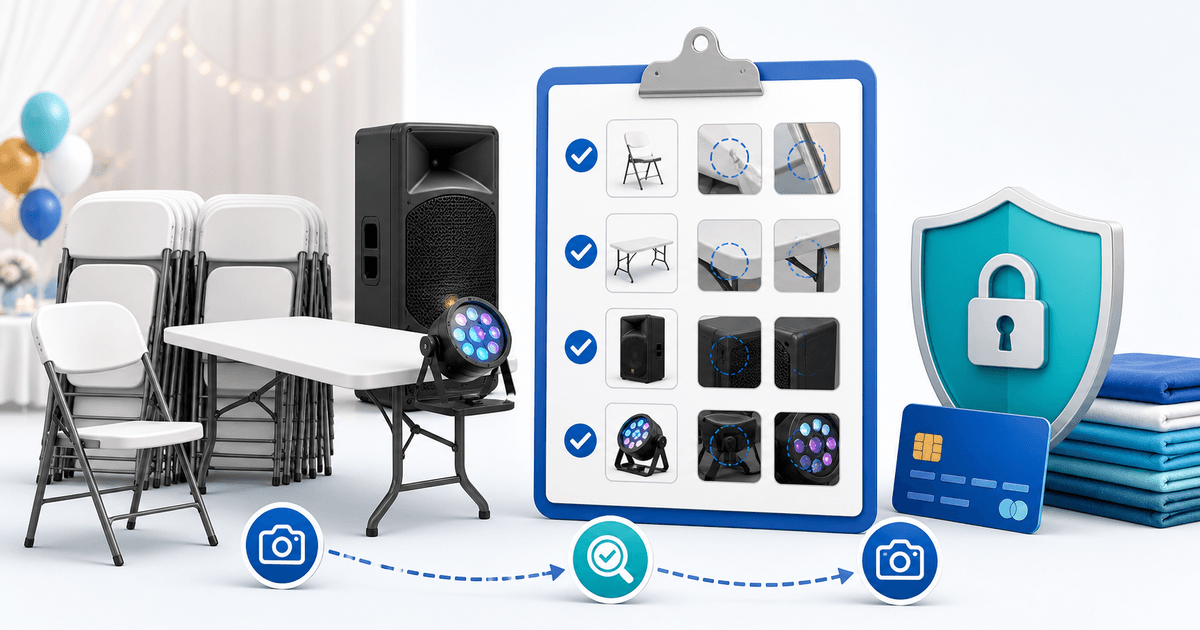
A party-rental security deposit should be tied to a counted, photographed inventory at dispatch and the same inspection at return. Put chairs, tables, linens, speakers, lights and accessories on one manifest; then release the card hold promptly or capture only an itemized, contractually supported amount.
This operations guide is for small event, wedding and party-equipment rental teams. Its original asset is a paired inspection manifest that prevents a deposit decision from becoming a memory contest after a busy weekend.
Create One Paired Inspection Manifest
| Field | Dispatch record | Return record |
|---|---|---|
| Booking | Customer, venue, dates, order ID | Same identifiers confirmed |
| Quantity | Count by item and accessory | Returned, missing and substituted counts |
| Condition | Working state and existing marks | Same angle plus new condition |
| Cleanliness | Disclosed baseline | Ordinary use or chargeable cleaning evidence |
| Function test | Power, audio, light or locking test | Repeat the same short test |
| Payment state | Hold amount and capture deadline | Release, partial capture or review status |
Photograph batches with a visible item or container identifier. One wide image proves the group; close images prove serial numbers, existing damage or a new defect. Preserve original timestamps and do not edit the evidence copy.
Count the Small Parts That Create Large Disputes
High-value losses are obvious, but missing cables, clamps, remotes, power supplies, tent stakes, chair carts and linen bags cause repeated disputes. Give every kit a component count and container ID.
At dispatch:
- Count the primary items and accessories with the customer or responsible driver.
- Photograph the loaded groups and any pre-existing marks.
- Run a short functional check for powered equipment.
- Record replacement or cleaning tariffs already disclosed in the agreement.
- Confirm the deposit amount, card-hold meaning and planned inspection window.
At return, repeat the same order. Do not compare a close-up of a new scratch with no dispatch image of that surface.
Separate Booking Deposit, Rental Balance and Security Deposit
These payments solve different jobs:
| Payment | Purpose | Typical outcome |
|---|---|---|
| Booking deposit | Reserves the event date | Applied or handled under cancellation terms |
| Rental balance | Pays for agreed equipment and service | Settles as a normal charge |
| Security-deposit hold | Reserves card capacity for defined return issues | Released or supported amount captured |
Do not call every upfront amount “the deposit.” The agreement, checkout and receipt should use the same label and describe refundability separately.
Make the Capture Decision Evidence-First
Before capturing any amount, require the signed term, paired evidence, item or kit ID, itemized calculation and live authorization state. Separate missing items, repair, replacement, excess cleaning and late return; each needs its own contractual basis.
A current party-rental agreement published by Delta Breeze Party Rentals illustrates the operational pattern: its equipment quantities are documented on a rental checklist, while its security deposit covers defined issues and is released after inspection subject to supported deductions. That is one operator's policy, not a universal legal rule.
If evidence is incomplete, keep the case in review and communicate the next update. Do not capture the full hold as a placeholder. If the authorization is near expiry, the deadline still does not substitute for proof.
Communicate One Clear Outcome
Send the customer one of four outcomes:
- Released: inspection complete, no supported deduction.
- Partially captured: amount, affected items, evidence and released remainder.
- Fully captured: itemized evidence supports the full authorized amount.
- Review open: unresolved items, evidence being gathered and next update time.
Avoid emailing full card details. Use the booking reference, amount, currency, provider reference and last four digits only when appropriate.
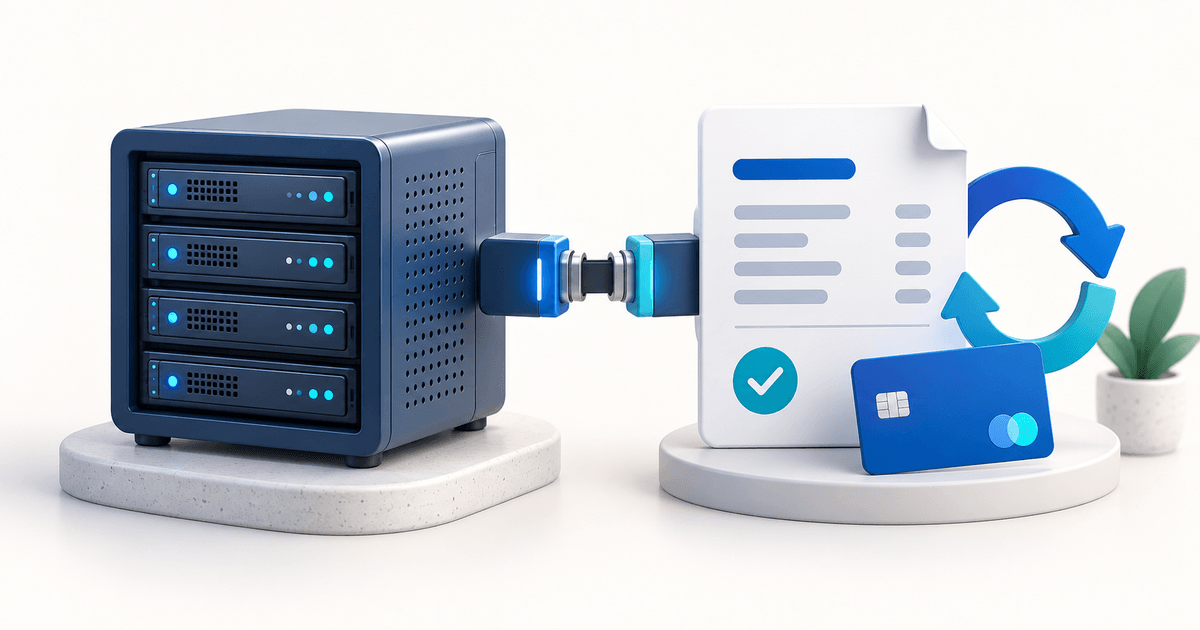
PayRequest's security-deposit workflow keeps the card authorization, countdown, release or capture and booking context together. Pair it with the broader equipment-rental inspection checklist and adapt the manifest to your inventory.
Test the Workflow Before the Next Event
Run three staff simulations: a clean return, one missing accessory and damaged powered equipment. Confirm that another employee can match dispatch to return evidence, calculate the supported amount, act before the provider deadline and send the correct customer outcome without relying on private messages or memory.