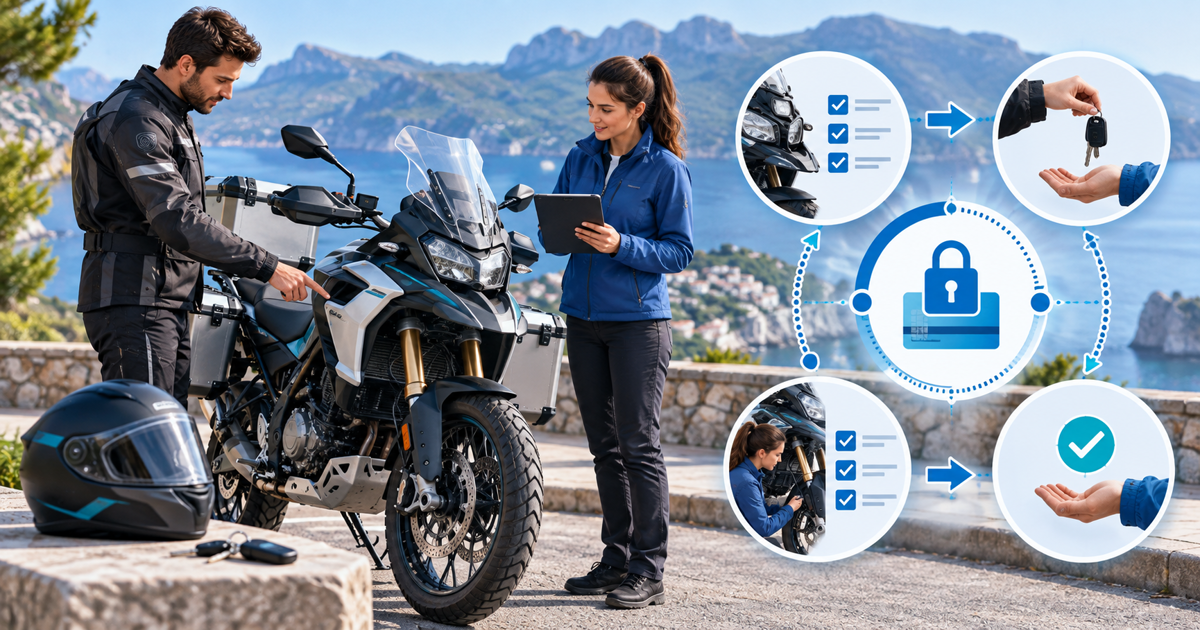
A motorcycle-rental security deposit should connect one rider, one motorcycle, one handover record and one return decision. Keep the rental price separate from the refundable deposit and from any later damage or loss charge. The operator's protection comes from clear terms and matched evidence, not from calling every amount a deposit.
This workflow is for small motorcycle and touring-bike rental businesses. Motorcycles add details that a generic equipment checklist misses: licence and rider eligibility, odometer, fuel, keys, helmet, luggage, accessories, tyre condition and photographs of existing marks. The amount, hold duration and capture rights depend on your provider, payment method, agreement and jurisdiction.
Separate the three payment jobs
Write the payment purpose before sending a booking link. A rental fee pays for the agreed time. A deposit or card authorisation addresses defined risks under the agreement. A damage or late-return charge is a later decision that needs a documented basis.
| Record | Example fields | Close it when |
|---|---|---|
| Booking | Rider, dates, bike ID and pickup point | The reservation is confirmed |
| Rider check | Licence class, age rule and required gear | Eligibility is reviewed under your policy |
| Deposit | Hold or collected amount and release rule | The provider state is confirmed |
| Handover | Odometer, fuel, keys, helmet and photos | Rider acknowledges exceptions |
| Return | Time, condition, mileage and evidence | Same inspection sequence is complete |
Rental agreements commonly address deposits, excess and damage, but one operator's terms are not universal law. Use the rules that apply to your business and ask local counsel to review high-risk terms. A current motorcycle rental policy is useful as an example of the fields operators may define, not as a template: Ride-in-Tours rental terms.
Photograph the same evidence twice
Use a bike-specific handover sheet with the motorcycle ID, VIN or internal asset label, odometer, fuel or battery state, tyre and light check, luggage, keys, helmet and existing scratches. Take consistent photos of both sides, controls, tyres, instruments and accessories. Let the rider add exceptions before departure.
At return, repeat the sequence in the same order. Record the time, mileage, fuel, key count and new observations. Do not treat a difference as automatically chargeable: first match the handover photo, the agreed term and the evidence that the rider had custody during the relevant period.
Check the actual authorisation window
A card authorisation is not the same as a completed charge. Stripe's official documentation explains that capture-later payments have expiry constraints that vary by payment method and network: Stripe capture later. Never promise a universal hold duration or bank-display release time.
PayRequest security deposits supports a link-based workflow with connected provider authorisation, release and supported partial capture states. Confirm the payment method and connected account before describing the route as a hold. If your setup collects the deposit instead, call it collected and explain the refund process rather than using pre-authorisation language.
Rehearse pickup, return and exception states
Use this original five-state rehearsal with one test bike:
- Booking confirmed but payment abandoned: no keys are released.
- Deposit authorised or collected: the reservation and rider reference match.
- Pickup with a pre-existing scratch: the exception is recorded and acknowledged.
- Clean return: the same fields are checked and the supported release or refund is initiated.
- Return with a documented issue: the rider receives the basis and the operator decides only the supported amount.
Create a customer-specific payment link for the booking and keep the bike ID beside the provider reference. PayRequest can help collect, release or capture the configured payment state; it does not decide whether a scratch is fair wear, verify a licence or replace an inspection record.
For an illustrative €600 deposit, calculate the platform charge and provider costs separately from the refundable amount. PayRequest's Free plan has no monthly charge and applies 2% per successful payment, capped at €25 per transaction; provider fees and authorisation behaviour remain separate. Review pricing and the connected provider's current terms.
Measure confirmed bookings, matched rider/bike records, inspection completeness, release time, unmatched payments and disputed deductions. A clear record helps the operator and rider understand what happened without promising a particular dispute outcome.
Editorial note: AI assisted with this article and its illustrative cover. The inspection matrix and five-state rehearsal are original planning tools; no customer result, live hold test or legal conclusion is claimed.