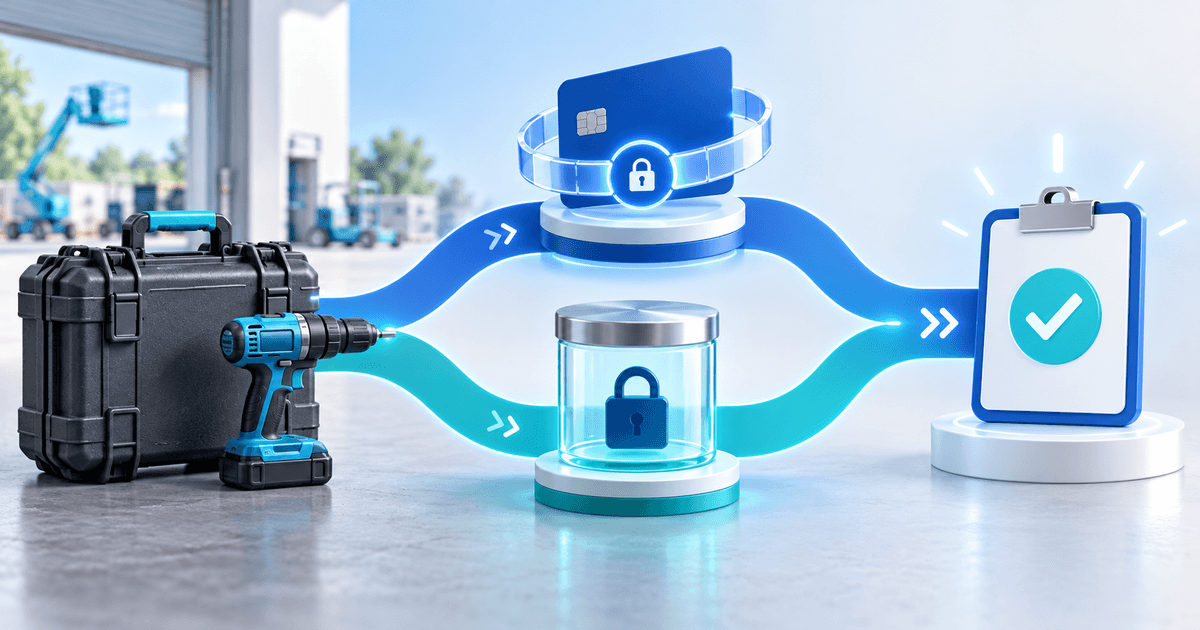
For an equipment-rental operator, a card hold and a refundable deposit solve related but different jobs. A card hold reserves funds without completing a charge; a refundable deposit is collected money that must later be refunded in full or in part. Choose only after checking the connected provider, payment method, authorization window, rental duration and the customer wording you can actually support.
This is for tool, camera, event and specialist-equipment rentals. The original contribution is a two-route decision card that joins payment mechanics to handover and return evidence. It is not legal advice and does not promise a particular hold duration, capture right or dispute outcome.
Compare the two routes before pickup
| Question | Card hold / pre-authorization | Refundable deposit |
|---|---|---|
| What happens first? | Funds are reserved, not settled | Funds are collected |
| What must the customer understand? | Available balance may be reduced temporarily | A charge will be refunded under stated conditions |
| Operational pressure | Authorization validity and supported capture | Refund processing and reconciliation |
| Best evidence | Hold reference, terms, paired inspection | Charge/refund references, terms, paired inspection |
Stripe documents manual capture as placing an authorization hold before a later capture, with support depending on the payment method. That is a processor capability, not a blanket rule for every provider or card. Confirm the real checkout options in your PayRequest account before telling a renter how a transaction will appear.
Use a four-question decision card
- Is the rental and return inspection within the authorization window supported by the actual provider and method?
- Can the customer reasonably keep the amount unavailable until the return check?
- Can your team produce a matched handover/return record and an itemized decision before the deadline?
- If you collect money instead, can you make and reconcile the promised refund without delay?
If any answer is unclear, resolve it before checkout rather than using vague “deposit” language. A €500 example does not make €500 appropriate for every kit; base the amount and terms on your documented risk, agreement and applicable rules.
Make the inspection decide the payment action
Create a custody record with booking ID, renter, kit/serials, accessories, dated handover photos, return photos, test result, relevant term and payment reference. On return, release the hold or refund the deposit when the record supports it. If there is a genuine issue, preserve the evidence and follow the agreed process; do not automatically take the full amount for a minor or unproven problem.
PayRequest security deposits is the product destination for a hold, release and supported capture workflow. The equipment-rental inspection checklist helps with custody evidence, while pricing explains the PayRequest platform fee separately from provider fees. Test one complete buyer-to-return process before putting a deposit promise on an ad or booking confirmation.
Editorial note: AI assisted with this article and its illustrative cover. The comparison table and four-question decision card are original planning tools; no live authorization, capture, refund or legal conclusion is claimed.