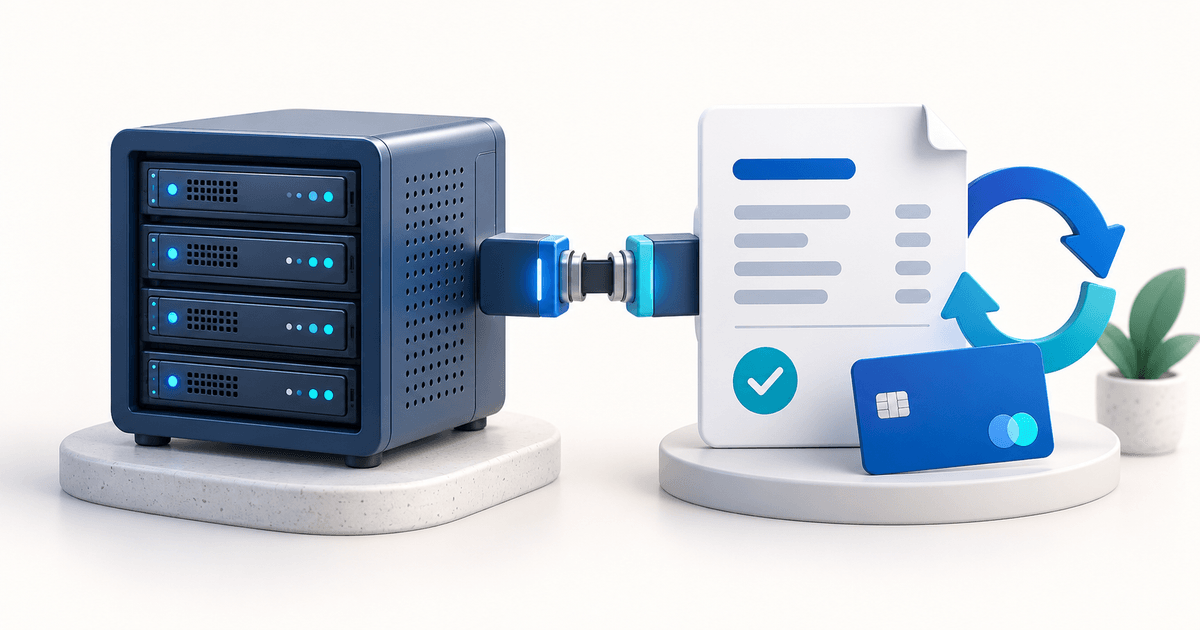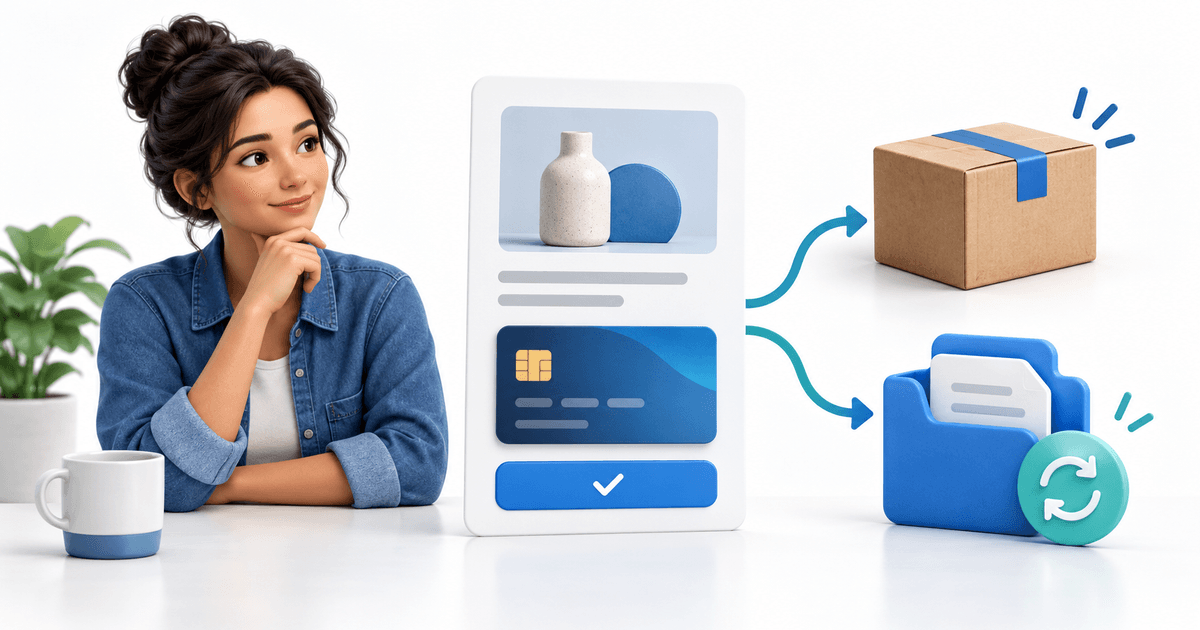
PayPal merchant Payment Links can be enough for a seller who needs a shareable hosted checkout for a product or service. Consider a wider billing or selling platform when the difficult part is issuing client invoices, handling authorized renewals, delivering purchased files or coordinating more than one provider—not merely creating a URL.
Do not judge today's merchant links by PayPal.Me alone. They are different products. This article replaces outdated blanket claims that PayPal links cannot accept cards or show business branding.
Which supposed limitations still matter?
PayPal's merchant Payment Links page describes hosted checkout without a website, including products, services and digital items. Availability and payment choices vary by market, buyer and account.
| Claim to check | Current decision-ready answer | What to ask before choosing |
|---|---|---|
| “Every buyer needs a PayPal account” | Eligible checkout methods can include cards; do not promise guest checkout to every buyer | Does the intended buyer see a usable method in the relevant country? |
| “There is no branding” | Merchant links can include product imagery and business identity | Is the supported branding enough for this offer? |
| “PayPal cannot do recurring payments” | PayPal has separate recurring-payment products | Do you need one-off checkout, repeated invoices or an authorized subscription? |
| “Selling a digital item means automatic delivery” | Taking payment and fulfilling a file order are separate requirements | Who grants access, handles a failed delivery and controls the download? |
| “Another platform removes PayPal restrictions” | A billing layer does not override provider eligibility or account restrictions | Which provider and account actually process this transaction? |
See PayPal's checkout customization, availability guidance and recurring payments. There is no universal abandonment percentage or global fee in this comparison.
Choose for the work after checkout
For a repeatable one-off offer, start by evaluating native merchant links. For a named client, payment terms or a project balance, assess PayPal Invoicing instead of making every sale a generic product checkout. A recurring invoice still needs to be distinguished from permission to collect automatically.
For downloadable files, compare the complete paid-order-to-download journey. A return URL by itself is not proof that only the purchaser can retrieve the file. For multiple provider options, evaluate a platform supporting your eligible providers; do not assume that all methods are interchangeable across countries, recurring billing and deposits.
Our invoice versus payment link comparison covers format selection. The decision here is whether the work surrounding your payment now justifies another platform.
Work through a 30-order seller month
Suppose you sell 30 standard items at €40 each: €1,200 in successful payments. Assume manually matching and delivering each order takes four minutes. That is 30 × 4 = 120 minutes. At your hypothetical internal value of €25/hour, this represents €50 of work—not a measured saving from any product.
Use that worksheet to compare offers: monthly subscription + platform fees + provider fees + remaining handling time. Automation only removes the tasks it actually completes. Returns, disputed orders and customer questions may still need you.
At current PayRequest pricing, Free's standard payment fee in this example is 30 × (€40 × 2%) = €24, before provider fees. Premium is €5/month and Business €20/month, with 0% standard platform fees while active. Check feature eligibility: digital products require a paid plan and billing automation belongs to Business. Commission payments keep their separate 2% fee capped at €25 per payment on every plan. Do not present the platform fee cap as a cap on PayPal's processing costs.
Keep PayPal, add the workflow only if needed
With PayRequest you can assess branded payment links, eligible provider connections and the relevant billing or digital-product delivery workflow. It is an additional software layer, with its own plan and provider requirements. Native PayPal remains a reasonable choice when it already completes your selling job.
Create an account and connect an eligible provider, then evaluate one real offer from customer checkout through the promised outcome. For digital delivery, verify purchased-file access rather than merely viewing the payment confirmation. No live checkout test is claimed here.
Editorial note: substantially reviewed with AI assistance on 16 October 2026. Original publication date retained. Official provider sources replace obsolete claims; the order and workload worksheet is hypothetical, not a customer result.