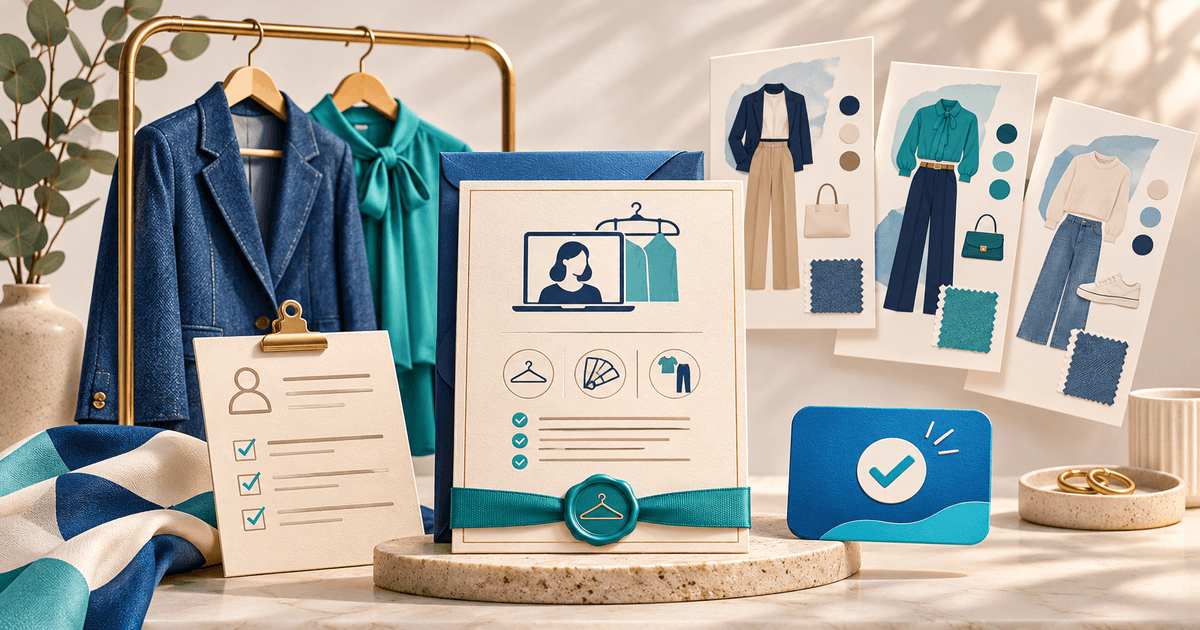
To sell personal styling services online, offer one defined wardrobe problem, a clear set of deliverables and a service fee the client understands before paying. Then connect the client brief, payment, appointment and finished outfit advice. A checkout link helps collect the fee; your offer and delivery process make the service worth buying.
This guide is for independent wardrobe stylists and image consultants selling their own expertise. It focuses on a virtual service using clothes the client already owns, with optional shopping recommendations. It does not assume you purchase garments, manage returns or provide an automated styling app.
Pick one wardrobe job to sell
Start with a situation you can recognize and solve: returning to office work, making more outfits from an existing wardrobe, or choosing looks for a particular event. Describe the useful deliverable rather than promising a complete personal transformation.
A hypothetical first offer might be a virtual workwear refresh: a 45-minute call, six outfit combinations assembled from up to twelve client-supplied garments, and a short PDF explaining the combinations. Add a small shopping shortlist only if it belongs in the price. These are example boundaries, not recommended market rates or evidence of customer demand for your particular style.
If your audience only needs a live consultation, sell that. If they need written advice after the call, state the delivery date and account for that work. Do not sell a one-hour appointment while quietly promising several days of research.
Define what the client can buy
Anastasiia Prade's published styling terms distinguish agreed styling deliverables from clothing purchases, alterations and unlimited availability. Your own boundaries should reflect your actual service, rather than copying another stylist's contract.
Use this scope map to prepare your product page. Download the editable offer worksheet if you want to adapt it.
| Decision | Example promise | Boundary to disclose |
|---|---|---|
| Wardrobe input | Up to twelve existing garments | Photos and details must be usable before preparation starts |
| Personal session | One 45-minute video consultation | State time zone, rescheduling terms and how the call is arranged |
| Outfit advice | Six combinations in a PDF | Reusing a garment across looks is allowed; six looks are not six new purchases |
| Shopping recommendations | Up to three optional suggestions | Clothing budget is separate; availability and fit are not guaranteed |
| Revisions | One consolidated clarification round | A new event, season or brief is a new piece of work |
| Delivery | PDF within three business days of the call | Tell the client what happens if required information arrives late |
Do not imply that buying your package automatically reserves an appointment unless your actual booking flow does so. A service order and a calendar reservation can be separate steps.
Keep the service fee separate from clothing spend
The client should know whether the price buys advice, garments or both. For an advice-only package, say plainly: “The service fee covers my consultation and outfit plan. You buy any recommended clothing separately from the retailer.”
Calculate your price from intake review, preparation, the call, lookbook production, follow-up and payment costs. Milan Fashion Campus's pricing guidance identifies these kinds of scope and time boundaries; it is a useful prompt to count the work around the session. Your own costs and positioning determine the amount you charge.
Explain any affiliate relationship beside shopping links. Decide whether finding a replacement for an out-of-stock item is included, and for how long. Avoid “unlimited shopping support” unless you have priced and staffed that commitment.
Ask for a brief you can actually use
Collect the goal, daily context, preferred silhouettes, clothing budget and deadline. Ask what the person wants to keep wearing and which recommendations they would find unhelpful. A client should be able to set a boundary without explaining a sensitive personal history.
Request only necessary photos. Explain how to frame garments or outfits, where to send them securely, who can see them and how long you retain them. Do not require full-body photographs if garment-only images solve the task. Keep public portfolio permission separate from permission to use images privately for the service.
Before accepting a tight deadline, check that you can deliver. For a fixed package, you can use a short fit enquiry before payment when the brief might be outside your expertise. Decline or rescope a request that needs tailoring, medical advice or in-person work you do not offer.
Create the offer, then connect payment and delivery
PayRequest service pages support a fixed-price offer, client requirements and order delivery. Create your styling service, state the scope and timing, add the required intake questions and connect an eligible payment provider. Review the page as a buyer on a phone before sharing it.
Use intake fields for the brief details they support. Do not promise photo uploads inside checkout merely because you can ask text questions; describe a separate secure photo handover if needed. Payment methods depend on your provider, country and verified account.
After confirmed payment, review the order requirements and arrange the session through the process you stated. Use a booking product when selecting available times is the central purchase, and verify its current plan and provider requirements before offering it. Do not describe a manually arranged session as an automatic calendar integration.
PayRequest can record service progress and send a delivery message or HTTPS link when the work is ready. You remain responsible for the consultation, call tool, lookbook and advice. It is not a garment retailer or a replacement for specialist styling software.
Deliver something the client can use tomorrow
Label each look with its purpose, the garments involved and the reason the combination works. If a shopping suggestion is optional, make that clear. Include alternatives for an unavailable garment rather than making the entire plan depend on one retailer's stock.
Before sending, check that the lookbook matches the accepted brief and that private photos are not accidentally included in a public link. Explain how the client can request the included clarification round, its deadline and what counts as extra work.
When the brief changes, agree the new deliverable and price before doing it. If the client wants a different direction because you missed a stated requirement, assess that separately from a new request. Apply your actual terms and applicable consumer rights; a delivery notification alone does not settle a dispute.
Publish one offer with one next step
Show your own representative work with permission, a sample deliverable that does not expose a client, the service scope and the fee. Share the offer beside a useful styling tip, with a specific invitation such as “Book a workwear refresh using clothes you already own.” You still need your own discovery and trust-building; a payment page does not supply clients.
Check current PayRequest plans before publishing. Free has a 2% standard payment fee capped at €25 per transaction; active Premium (€5/month) and Business (€20/month) remove standard platform fees. Payment-provider fees and the separate commission-payment rules remain applicable. Plan selection or registration does not activate paid access.
Start with the package you can deliver consistently. Once the scope, brief and handover are clear, create your service page and give the client a straightforward way to buy it.
Editorial note: AI assisted with this draft and illustrative cover. The wardrobe package is hypothetical. No styling session, customer outcome or payment was tested. Product pages and sources reviewed on 13 November 2026.