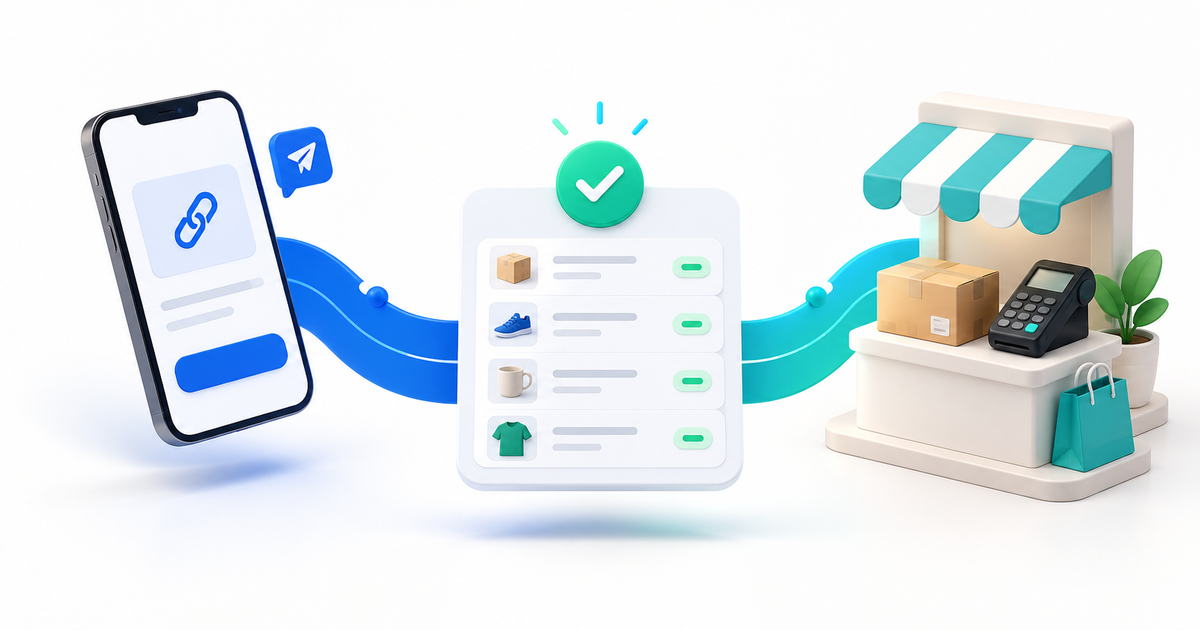
Choose PayPal directly when its merchant checkout and wallet experience meet your selling needs. Consider Payplug when you want its merchant payment tools across remote, online and in-store sales. These routes are not always mutually exclusive: Payplug currently lists PayPal among its payment methods, so ask what is available in your contract before treating this as a wallet-versus-cards decision.
This comparison is for sellers choosing how to collect their next orders, especially merchants serving France and nearby European markets. It concerns business sales, not personal transfers. Eligibility, checkout methods and prices must be checked for the seller's country and account.
Both routes can collect remotely
PayPal's merchant Payment Links let a business create hosted checkout with product details and pricing. This is a merchant selling product, distinct from simply sharing a personal money-transfer address. Confirm that the product is available to your business.
Payplug Pay by Link supports sending a secure payment-page link during a customer conversation, including by email or messaging. Its portal route means a merchant does not always need a web shop or terminal for that collection. Do not assume that every Payplug purchase requires building a checkout integration.
| Buying question | Direct PayPal | Payplug |
|---|---|---|
| Mainly share a seller checkout | Assess native merchant links | Assess Pay by Link and the applicable offer |
| Need several sales channels | Identify the separate tools and reporting required | Check the offered online/in-store combination |
| Want PayPal as a buyer option | Verify supported checkout methods for the account | Confirm PayPal eligibility and activation within the contract |
| Need an existing shop integration | Check the exact platform and checkout route | Verify the actual module and supported features |
| Sell a file or service | Assign delivery after successful payment | Assign delivery after successful payment |
Payplug's current feature list includes payment links, several checkout layouts and multiple methods, including PayPal. A published feature list does not establish that every method is active on every plan or merchant account. Obtain confirmation for the combination you intend to sell with.
Build a 50-order quote rather than compare headline percentages
Imagine a merchant taking thirty remote orders at €40 and twenty shop orders at €60 in one month. These are hypothetical inputs, not expected sales or a tested provider workload.
| Channel | Orders | Average order | Gross sales |
|---|---|---|---|
| Remote checkout links | 30 | €40 | €1,200 |
| In-store collection | 20 | €60 | €1,200 |
| Total | 50 | — | €2,400 |
Request a quote for each channel and payment-method mix. For a percentage r expressed as a decimal and fixed fee f in euros, a channel estimate is gross sales × r + successful orders × f. Add subscriptions, equipment, currency conversion, cross-border charges and relevant refund/dispute costs separately.
For example, if a hypothetical quote were 2% + €0.20 for all fifty orders, processing would be €2,400 × 0.02 + 50 × €0.20 = €58. That is an arithmetic illustration, not a current PayPal or Payplug rate. If remote and shop rates differ, calculate the two rows separately. If ten buyers choose a differently priced wallet method, split those ten orders into another row.
Compare the provider's current local merchant terms. Older comparison pages may quote a legacy rate or describe wallet checkout as always requiring a buyer account. Neither assumption is a sound basis for buying today's product.
Reconciliation can matter as much as the checkout
Use one merchant order reference across the quote, transaction and delivery record. For the fifty-order example, track order amount, paid status, payment route, settlement and any refund. A checkout confirmation, an available account balance and a bank payout are different events.
Ask a prospective provider to show what happens when a €40 order is refunded and when a customer pays through the alternative wallet route. Determine which dashboard owns the refund, how it appears in the export and which charges are retained under the relevant terms. This is a purchase acceptance checklist; we have not performed that provider test.
If you combine PayPal with another checkout platform, establish which merchant relationship processes the payment and where the transaction can be found. More payment choices do not automatically create one reconciled ledger or one fee schedule.
A payment link is only part of selling
For a physical order, retain the agreed product, delivery address and fulfilment evidence. For a service, connect payment to scope and delivery date. For a download, verify the file-delivery step separately from the ability to take payment.
Our invoice, payment link and checkout comparison explains those broader workflow choices. Keep that distinction when evaluating either provider: accepting a digital-item payment does not itself prove automatic file fulfilment.
When to add PayRequest
PayRequest payment links suit sellers who want a hosted collection workflow using an eligible connected provider, including PayPal where supported. PayRequest is not presented as a Payplug integration or as a replacement for an omnichannel acquiring contract.
If your requirement includes selling downloads with automatic delivery, evaluate that specific workflow and provider eligibility. If you already have a suitable shop and collection process, adding another platform may not solve a problem.
PayRequest Free is €0/month with a 2% standard payment fee; Premium is €5/month and Business €20/month. Active paid plans have 0% standard platform payment fees. Provider fees and commission-payment exceptions remain separate. Include this layer in your cost model rather than assuming it is cheaper than going direct.
If the hosted workflow fits, create an account, connect an eligible provider and prepare one clearly described seller checkout. Confirm successful payment in the merchant record before fulfilling the order.
*Method: primary sources checked 1 November 2026. Original hypothetical fifty-order quote and reconciliation worksheet; no provider test, savings or customer result claimed. AI assisted the text and illustration, followed by editorial review.*