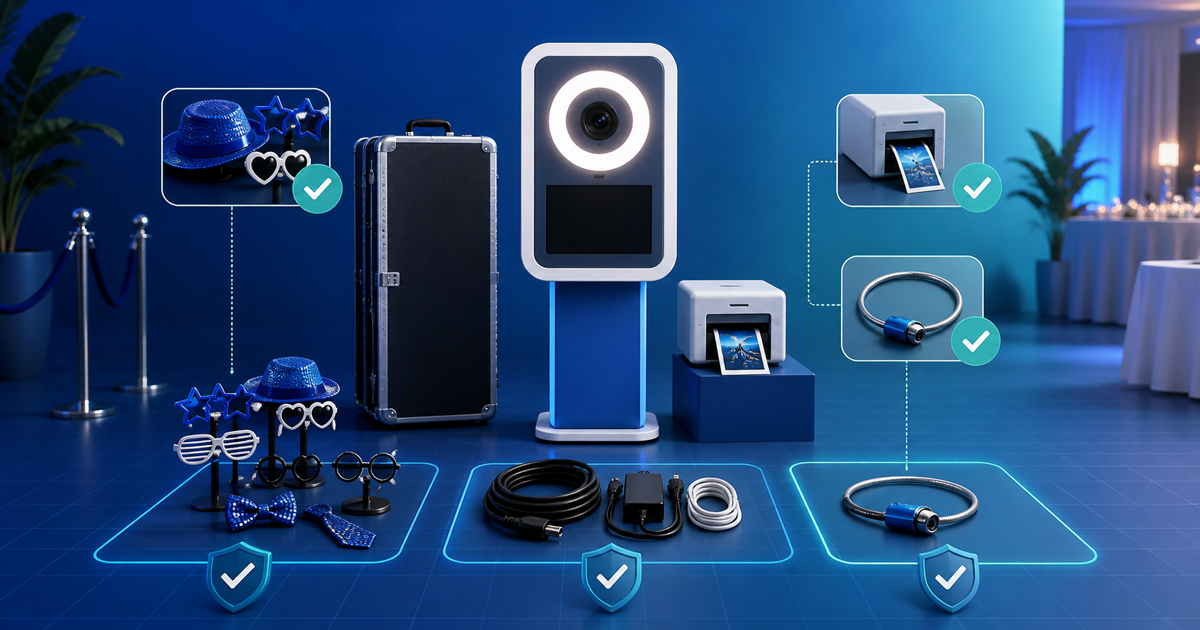
A self-service photo booth deposit should protect identified equipment during the customer's custody period. Record the kiosk, camera or tablet, printer, lighting, backdrop, cables and props at dispatch and return; keep booking fees, consumed print media and service failures outside the damage hold unless your disclosed terms clearly say otherwise.
This checklist is for unattended and drop-off photo booth operators. Its original asset is a three-zone handover ledger that separates high-value electronics, presentation equipment and countable accessories.
Separate Four Different Money Events
| Event | Purpose | Normal treatment |
|---|---|---|
| Reservation payment | Holds the event date | Applied or retained under cancellation terms |
| Rental balance | Pays for the booked booth service | Settled before or on the agreed date |
| Security-deposit authorization | Reserves capacity for defined loss or damage | Released or supported amount captured after inspection |
| Service remedy | Addresses provider non-performance | Credit, partial refund or re-performance under terms |
A jammed printer, app outage or missing gallery caused by the provider is not automatically customer damage. Likewise, expected paper and ink use belongs in the rental price, not a surprise deposit deduction.
Use the Three-Zone Handover Ledger
| Zone | Record | Repeatable evidence |
|---|---|---|
| Core electronics | kiosk ID, tablet/camera, printer, router, power supply | serials, ports, screens, test print, boot video |
| Presentation | stand, ring light, backdrop, frame and cases | corners, locks, fabric condition, complete wide view |
| Accessories | remotes, cables, paper rolls, prop set, signage | count sheet, labelled trays and packed case photo |
Photograph the asset ID first, then use the same views at return. Record custody start, venue contact, collection time and who completed each check. For a drop-off booth, document the moment the operator leaves and the moment it is collected; an attendant-controlled booth has a different custody boundary.
Current photo booth rental agreements visible in the SERP commonly distinguish equipment, printers, backdrops and props and address guest-caused damage. They do not establish one universal deposit amount or deadline. Set the hold from your own replacement exposure, insurance excess, custody model and provider authorization window, then disclose the calculation and local terms before authorization.
Run the Functional Check Before and After
Power the complete kit through the supplied cable path. Capture a photo, save it, complete one print when printing is included, test the sharing route without exposing a previous event's data and verify that cases and transport locks close correctly.
At return, repeat the same sequence before wiping event data or mixing accessories with another kit. Classify exceptions as pre-existing, consumable use, ordinary wear, missing item, new physical damage, service fault or unknown pending assessment. Quarantine unsafe electrical or structural equipment; the deposit checklist is not a safety certification.
Make the Capture-or-Release Decision
Release promptly when the ledger matches and the function test passes. For a missing remote, damaged backdrop or supported repair, connect the identified asset, before/after evidence, disclosed term and itemized amount. Capture only the supported amount when the provider and terms allow it, and release the remainder.
Send the customer the inspection result and authorization event. Do not call a released hold a refund: a hold may never have settled as a charge. If assessment needs a specialist, tell the customer what remains under review and stay within the provider's authorization timing.
Run the Deposit in PayRequest
PayRequest security deposits show the authorization status, countdown and release or capture event. The party-rental deposit workflow is the closest setup path for event inventory.
Close the rental only after the equipment and accessory ledgers reconcile, the functional check is recorded, the customer receives the decision and the hold is released or a supported amount is captured.