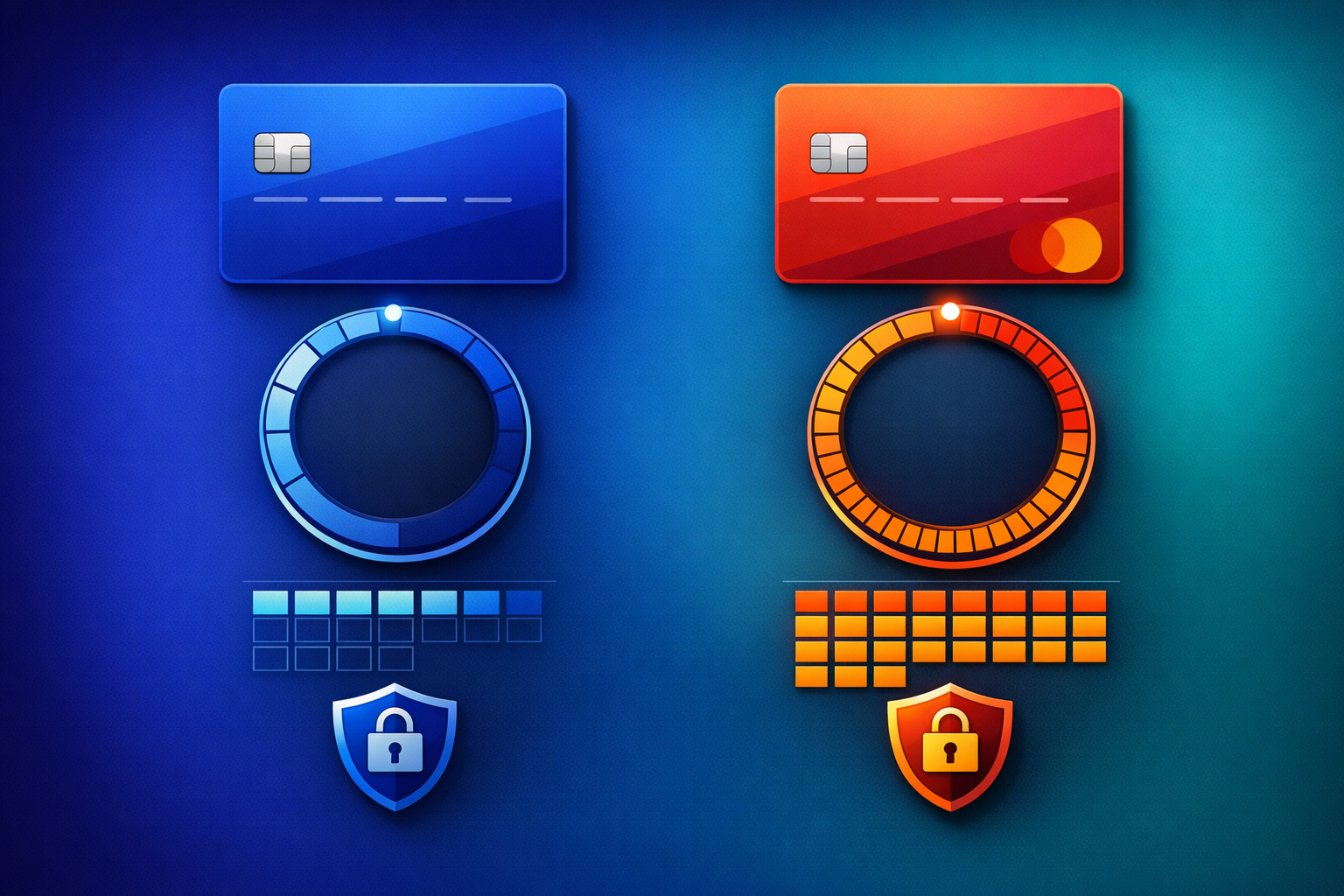
If you collect security deposits or hold funds before delivering a service, there is one detail that can make or break your payment workflow: how long the pre-authorisation actually lasts. Get it wrong, and the hold expires before your guest checks out or your rental period ends — leaving you scrambling to re-authorise or chase a separate charge.
The answer depends almost entirely on which card network the customer uses. Visa and Mastercard have different rules, and those differences matter more than most businesses realise.
Key Takeaways
- Mastercard pre-authorisation holds last up to 30 days for most merchants (31 days for accommodation and vehicle rental)
- Visa holds expire after 7 days by default for most merchant categories
- Visa offers extended holds (up to 31 days) only for specific merchant category codes like hotels and car rentals
- You cannot extend an expired hold — the customer must re-authorise
- PayRequest supports configurable hold durations from 1 to 28 days via Mollie's manual capture mode
- For bookings longer than 7 days, routing customers toward Mastercard or configuring your merchant category correctly can prevent expired authorisations
What Is a Pre-Authorisation Hold?
A pre-authorisation (also called an authorization hold or manual capture) is a two-step payment process. In the first step, the merchant requests a hold on the cardholder's funds. The card issuer verifies that funds are available and reserves them — but no money actually moves. In the second step, the merchant captures (charges) all or part of the held amount, or releases the hold entirely.
This mechanism is essential for any business where the final charge isn't known at the time of booking. Hotels use it for incidentals and damage deposits. Car rental companies hold a deposit that covers potential damage or fuel charges. Equipment hire businesses reserve funds until the equipment is returned. Vacation rental hosts hold a security deposit for the duration of the stay.
The critical question is: how long does that hold remain valid before it expires and the funds are released back to the customer?
Visa Pre-Authorisation Hold Times
Visa's default authorisation window is 7 days for most merchant category codes (MCCs). After 7 days, the authorisation expires and the reserved funds are automatically released to the cardholder.
For the majority of businesses — e-commerce, professional services, general retail — Visa authorisations are valid for 7 calendar days from the date of authorisation. This window is non-negotiable and cannot be extended by the merchant or the payment processor.
If you run a consulting firm that collects a deposit before starting a two-week project, a Visa pre-auth will expire halfway through. The same applies to equipment rental over 10 days, workshop series spanning multiple weeks, or any service with a delivery period longer than one week.
Visa does allow longer holds for specific merchant categories:
- Hotels and accommodation (MCC 7011): Up to 31 days
- Vehicle rental (MCC 7512, 3351-3500): Up to 31 days
- Cruise lines (MCC 4411): Up to 31 days
These extended windows require your payment processor to have you registered under the correct MCC. If your business is classified as "general services" rather than "accommodation," you will not automatically qualify for the 31-day window — even if you actually run a vacation rental.
Visa introduced a distinction between estimated and final authorisations. An estimated authorisation (used at check-in) can be followed by a final authorisation (at checkout) for a different amount. This helps hotels that need to adjust for minibar charges, room service, or late checkout fees. However, the estimated authorisation still expires within the standard or extended window.
Mastercard Pre-Authorisation Hold Times
Mastercard takes a fundamentally different approach. The default authorisation window for Mastercard is 30 days for most merchant categories — over four times longer than Visa's default.
For the vast majority of merchants, Mastercard pre-authorisations remain valid for 30 calendar days. This applies across all standard MCCs, meaning a consulting firm, equipment rental company, or event organiser gets the same 30-day window without needing a special merchant category.
This single difference makes Mastercard significantly more practical for any business with a service period longer than one week. A two-week vacation rental, a 21-day equipment hire, a month-long coaching programme — all of these fit comfortably within Mastercard's standard authorisation window.
For hotels (MCC 7011) and vehicle rental companies (MCC 3351-3500, 7512), Mastercard extends the window to 31 days. The practical difference from the standard 30 days is minimal, but it aligns with calendar months and covers full 31-day months like January, March, or July.
The key advantage is simplicity. With Visa, you need to worry about whether your MCC qualifies for extended holds, whether your processor has configured it correctly, and whether 7 days is long enough for your specific use case. With Mastercard, 30 days is the baseline — no special configuration required.
For businesses like vacation rentals, where the average stay might be 10–14 days, Mastercard authorisations work reliably without any workarounds. Visa authorisations for the same stays require either an extended MCC or a strategy for re-authorising mid-stay.
Side-by-Side Comparison: Visa vs Mastercard Hold Times
| Factor | Visa | Mastercard |
|---|---|---|
| Default hold duration | 7 days | 30 days |
| Hotels & accommodation | Up to 31 days (MCC 7011) | Up to 31 days |
| Vehicle rental | Up to 31 days (MCC 3351-3500) | Up to 31 days |
| Other merchants | 7 days (no extension) | 30 days |
| Partial capture | Supported | Supported |
| Multiple captures | Limited (depends on issuer) | Limited (depends on issuer) |
| Hold extension | Not possible | Not possible |
| Re-authorisation needed | After 7 days for most | After 30 days for most |
The gap is clear: for any booking, rental, or deposit that spans more than one week, Mastercard gives you significantly more breathing room.
What Happens When a Pre-Authorisation Expires?
When a pre-authorisation reaches its time limit, the hold is automatically released by the issuing bank. The reserved funds become available to the cardholder again. From the merchant's perspective, the authorisation is no longer valid and any attempt to capture will fail.
This is where businesses get caught. Imagine a vacation rental host who places a €500 security deposit hold when a guest checks in for a 14-day stay. If the guest paid with Visa (standard MCC), the hold expires on day 7 — a full week before checkout. When the host tries to capture €150 for a broken lamp on day 14, the capture fails.
The host now has two options, neither ideal:
- Request a new pre-authorisation — requires the guest to go through the payment flow again, which is awkward mid-stay and may not succeed if the guest's available credit has changed
- Process a regular charge — works, but charges the full amount immediately rather than holding and capturing, and the guest didn't agree to a direct charge
Both scenarios damage the guest experience and create operational friction. The solution is to either ensure the correct MCC for extended holds or route customers toward Mastercard for longer stays.
While card networks set the maximum hold duration, individual issuing banks may release holds earlier. Some issuers release Visa holds after 5 days rather than 7, or Mastercard holds after 14 days rather than 30. This variation is outside the merchant's control but is worth understanding — the network limit is a maximum, not a guarantee.
Practical Strategies for Longer Hold Periods
If your business regularly needs holds longer than 7 days, here are proven approaches that work within the card network rules.
If you run a hotel, vacation rental, or car rental business, verify that your payment processor has assigned the correct merchant category code. The difference between MCC 7011 (Hotels/Motels) and a generic services code means the difference between 7-day and 31-day Visa holds. Contact your processor (Stripe, Mollie, or PayPal) to confirm your MCC.
For bookings longer than 7 days, you can inform customers that Mastercard is preferred for the deposit hold. A simple note in your booking confirmation — "We recommend using Mastercard for your security deposit as it supports longer hold periods" — can reduce expired authorisations significantly.
You cannot force customers to use a specific card, but clear communication helps. Many customers have both Visa and Mastercard and will choose whichever you recommend if given a reason.
Another approach is to separate the security deposit from the booking payment. Charge the stay or rental fee immediately as a regular payment, and use a pre-authorisation only for the security deposit. This way, even if the deposit hold expires and needs re-authorisation, the main payment is already settled.
PayRequest's Smart Links support this workflow — you can send one link for the booking payment and a separate security deposit link for the hold.
If your average booking is 10 days but some extend to 20, consider setting a 7-day hold with a reminder to re-authorise if needed. PayRequest's dunning and reminder system can automate these follow-ups, sending the customer a new authorisation link before the original hold expires.
How PayRequest Handles Pre-Authorisation Holds
PayRequest uses Mollie as the payment processor for pre-authorisation holds. Mollie's manual capture mode supports configurable hold durations from 1 to 28 days, with Mastercard transactions supporting up to 30 days.
With PayRequest, you create a security deposit by generating a Smart Link with manual capture enabled. You set the hold amount (e.g., €500), the hold duration (e.g., 14 days), and share the link with your customer via email, SMS, or QR code.
The customer clicks the link, enters their card details, and authorises the hold. No money moves. You receive a notification that the hold is active, and the customer sees a confirmation with the hold amount and expected release date.
When the booking ends, you have three options from your PayRequest dashboard:
- Full capture: Charge the entire held amount (e.g., €500 for major damage)
- Partial capture: Charge only what is owed (e.g., €75 for a cleaning fee) and release the rest
- Full release: Release the hold entirely — no charge, customer gets their funds back
The customer is notified automatically through their customer portal, which shows the deposit status in real time.
PayRequest lets you configure hold periods from 1 to 28 days. For Mastercard transactions, the effective hold can extend up to 30 days based on the network rules. For Visa transactions under standard MCCs, holds beyond 7 days may expire regardless of your configured duration — which is why understanding the network differences matters.
The recommendation for businesses with stays longer than 7 days: set your hold duration to match the expected booking length, and communicate Mastercard preference to customers where possible.
Frequently Asked Questions
Visa pre-authorisation holds last up to 7 days for most merchant categories. Hotels, car rentals, and cruise lines can qualify for extended holds up to 31 days if registered under the correct merchant category code (MCC). The hold duration is set by the card network — merchants cannot extend it once placed.
Mastercard holds last up to 30 days for most merchant categories, and up to 31 days for accommodation and vehicle rental merchants. This 30-day default applies to all standard MCCs, making Mastercard significantly more flexible than Visa for businesses with service periods longer than one week.
No. Once a pre-authorisation expires, the held funds are released to the cardholder and the authorisation is no longer valid. You cannot extend, renew, or modify an existing hold. The only option is to request a new authorisation from the customer, which requires them to complete the payment flow again.
The capture will fail. Your payment processor will return an error indicating that the authorisation is no longer valid. You will need to either request a new pre-authorisation from the customer or process a standard (non-held) charge. Late captures are a common source of payment failures in hospitality and rental businesses.
Yes. PayRequest supports hold durations from 1 to 28 days through Mollie's manual capture mode. Mastercard transactions can hold up to 30 days based on network rules. You configure the hold period when creating a security deposit link, and PayRequest manages the authorisation, capture, and customer communication automatically.
Choose the Right Hold Strategy for Your Business
The difference between a 7-day and a 30-day hold window is not a technicality — it directly affects whether your deposit workflow actually works for your booking length. For vacation rentals with 10–14 day stays, equipment hire over multiple weeks, or any service that spans more than one week, understanding the Visa vs Mastercard distinction saves you from expired holds, awkward re-authorisation requests, and lost deposits.
PayRequest gives you the tools to handle both: configurable hold durations up to 28 days, automatic customer notifications through the customer portal, partial capture for fair damage charges, and Smart Links that make authorisation as simple as clicking a link.
Start your free trial to create your first security deposit link, or explore PayRequest's security deposit feature to see how it works.