PayPal.me does exactly one thing: it turns your name into a link where someone can type in an amount and send it to you. That's genuinely useful for splitting a dinner bill or getting paid back by a friend. It's a much thinner tool the moment you're using it for actual business — a client payment, a product sale, an invoice with a due date — because a flat "send money" link doesn't carry any of that context with it.
This isn't a complaint about PayPal.me being bad at what it does. It's that "what it does" is narrower than what most people end up needing once money changes hands for a reason more specific than a personal favor. This guide covers what a PayPal.me link actually can't do, and what a branded payment page adds back in: your own logo and colors, a QR code that's built in rather than bolted on, real invoicing, and the ability to let different buyers pay for different things from the same page.
Key Takeaways
- PayPal.me is a flat amount-entry link — no branding, no invoice, no product catalog, and only one way to pay (PayPal itself)
- payrequest.me replaces it with a branded page: your logo, your colors, your own URL structure
- Every payrequest.me link generates a QR code automatically — no separate QR tool or screenshot-and-print workaround
- Professional invoicing is built into the same page, with due dates and line items, not just a flat total
- A single payrequest.me page can hold multiple products, services, or amount options, so it works for more than one kind of transaction
- PayRequest charges 2% per successful payment, capped at €25 — separate from your payment provider's own processing fee
What PayPal.me Actually Is (and Isn't)
PayPal.me is, structurally, a redirect. Your link (paypal.me/yourname) sends whoever clicks it to a PayPal page where they type in an amount and confirm. There's no product description field, no automatic receipt beyond PayPal's own confirmation email, and no way to distinguish "this is for the March invoice" from "this is a birthday gift" other than a payer manually typing a note.
Splitting a bill or paying a friend back doesn't need context — the amount is the whole message. Client work, product sales, and recurring payments almost always need more: what's being paid for, whether it's part of a larger invoice, and whether the page even looks like it belongs to a real business rather than a personal account. A flat link doesn't carry any of that, which is exactly the gap a payment page is built to close.
A PayPal.me link is, visually, PayPal's page with your name inserted into a sentence. There's no space for your logo, your color scheme, or even a short description of your business. For a repeat client or a first-time buyer trying to decide whether a link is legitimate, that absence of branding is a small but real trust signal missing.
What a Branded Payment Page Adds
payrequest.me works as a direct replacement for the same use case — "here's my link, send me money" — but restores the pieces PayPal.me leaves out.
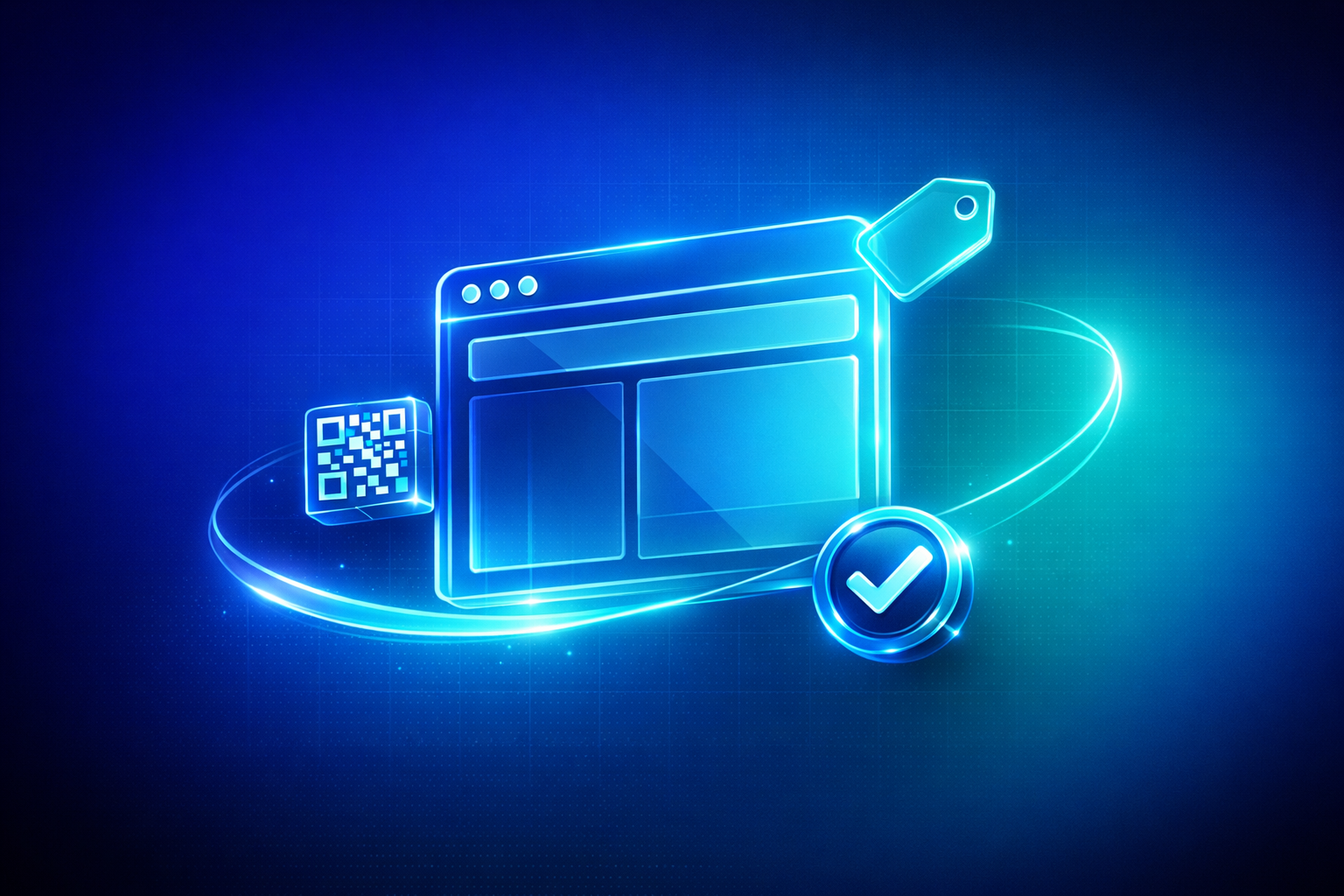
Instead of a generic PayPal redirect, your payrequest.me page carries your own branding: logo, color scheme, and a description of what you do. It's the difference between a page that looks like a personal PayPal account and one that looks like a small business's checkout.
Every payrequest.me link generates a QR code automatically, ready to drop onto an invoice PDF, a business card, a market stall sign, or a printed flyer. There's no separate QR-generator tool to bolt on and no risk of the code going stale if you update your link later — it's tied to the same page.
Invoicing on the same page means you can send an actual itemized invoice — line items, a due date, automatic reminders — rather than a flat number a payer has to interpret from a separate email or message. For anyone billing clients regularly, this alone closes most of the gap between "a link" and "a proper payment request."
A PayPal.me link is built around a single flat amount. A Payment Page can offer several options at once — different products, service tiers, or preset amounts — so different buyers land on the same branded URL and each pay for what's relevant to them, instead of you generating a new link for every price point.
PayPal.me vs. a Branded Payment Page
| Feature | PayPal.me | payrequest.me |
|---|---|---|
| Custom branding (logo, colors) | No | Yes |
| Built-in QR code | No | Yes, automatic |
| Line-item invoicing | No | Yes |
| Multiple products/amounts on one page | No — one flat amount | Yes |
| Payment methods | PayPal only | PayPal, Stripe, Mollie, 20+ methods |
| Fee | PayPal's standard rate | 2% capped at €25, plus provider fee |
The pattern across every row is the same: PayPal.me handles the payment itself well, but leaves everything around the payment — how it looks, what it's for, and how many things it can represent — for you to solve elsewhere.
Switching From PayPal.me Without Losing PayPal Itself
Moving to a branded payment page doesn't mean giving up PayPal as a payment method — payrequest.me still accepts PayPal payments alongside Stripe, Mollie, and 20+ local payment methods like iDEAL and SEPA. Buyers who prefer PayPal can still pay that way; you're not asking your existing audience to change how they pay, only upgrading what the page around that payment looks like.
Frequently Asked Questions
payrequest.me replaces a flat PayPal.me link with a branded page: your logo and colors, a built-in QR code, professional invoicing, and support for multiple products or amounts on one page — not just a single "send me money" field.
No. PayPal.me only accepts a flat amount typed in by the payer — there's no line-item invoice, no due date, and no automatic reminder. payrequest.me includes professional invoicing on the same page as your payment link.
Yes. Unlike a single PayPal.me link built around one flat amount, a payrequest.me page can list multiple products, services, or amount options, so different buyers pay for different things from the same page.
Yes — every payrequest.me link and payment page generates a QR code automatically, ready to print on invoices, business cards, or in-person signage.
payrequest.me is free to set up, with every feature included on the Free plan. PayRequest charges 2% per successful payment, capped at €25 — separate from whatever your underlying payment provider (PayPal, Stripe, or Mollie) charges for processing.
Bottom Line
PayPal.me is a fine link for splitting a bill with a friend, but it was never built to carry a logo, an invoice, or more than one thing to pay for. A branded payment page keeps the parts of PayPal.me people actually like — a simple shareable link — while adding back the branding, the QR code, and the invoicing that business use actually needs.
Set up your payrequest.me page and see the full PayPal.me comparison for the complete feature and fee breakdown.