Cleaning companies lose time when the crew, scheduler and billing process each keep a different version of what happened. The fix is a simple recurring workflow: define the service, record completion, issue the right invoice or recurring charge, send a payment route and follow up from the same customer record.
This guide is for residential cleaners, commercial cleaning teams and operators with recurring weekly, fortnightly or monthly clients. It separates booking frequency from billing frequency, because a customer may receive several visits but prefer one consolidated invoice.
Choose the Billing Model First
| Model | Best fit | Collection trigger | Main risk |
|---|---|---|---|
| Per-visit invoice | Variable scope or irregular visits | Completed job | More invoices and follow-up |
| Fixed recurring charge | Stable service and price | Agreed billing date | Scope changes can be missed |
| Monthly consolidated invoice | Several visits for one business | Period close | Approval may take longer |
| Deposit plus balance | First clean, deep clean or special job | Booking and completion | Deposit terms must be clear |
Do not make “recurring” mean an unlimited promise. Write the service area, visit frequency, included tasks, cancellation notice, extras, rescheduling rule and price-change process. The payment schedule should reflect that agreement.
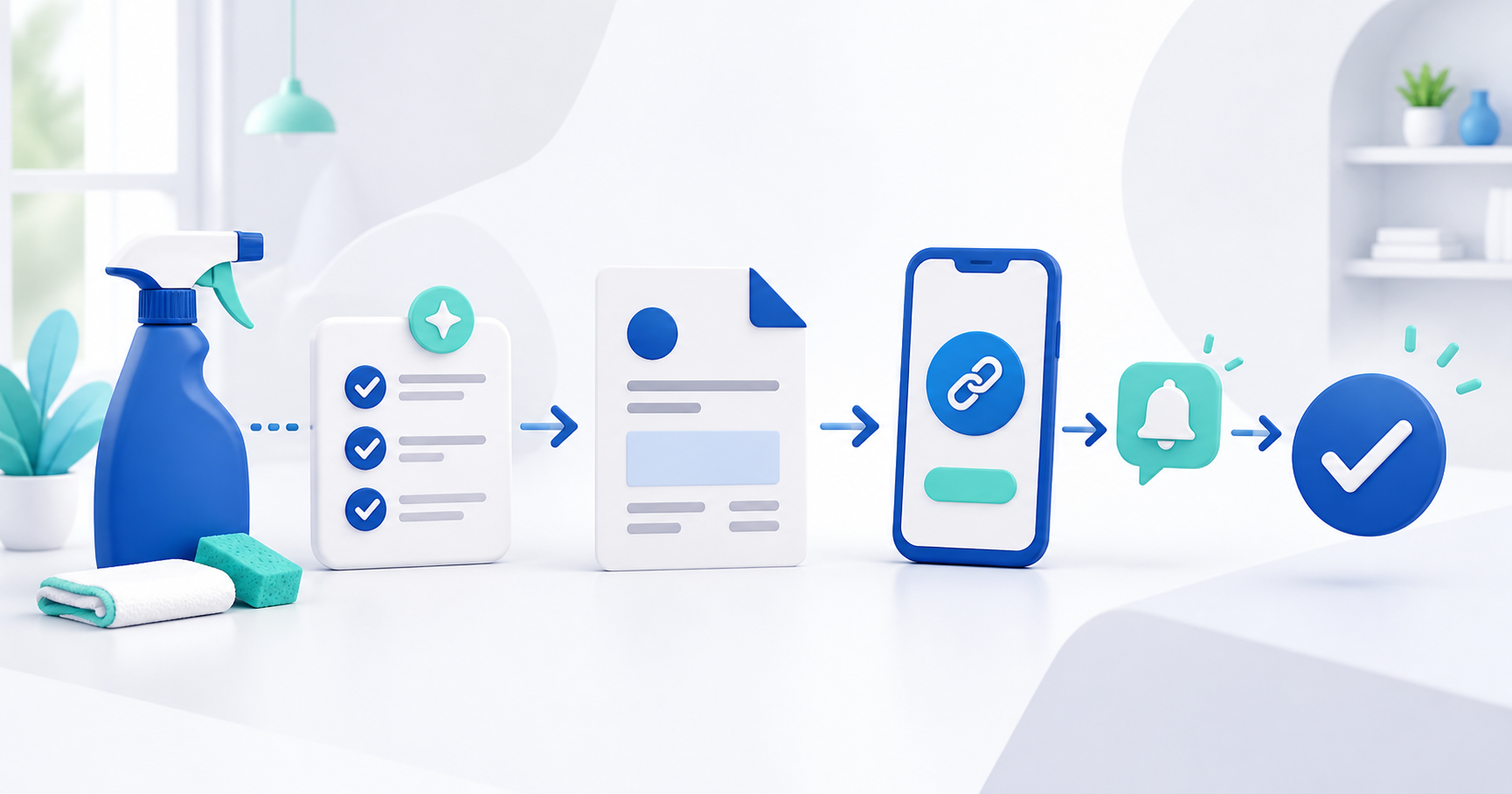
The Four-State Cleaning Billing Workflow
Create one customer record with the service address, billing contact, preferred payment method, visit frequency and agreed price. For commercial work, also record the purchase-order or cost-centre requirement before the first visit.
The crew or supervisor records the completed visit, exceptions, approved extras and any return visit. A short completion note prevents the invoice from becoming a dispute about whether the service happened.
Generate either the scheduled recurring charge or a customer-specific invoice. Describe the service period and location. If the amount changed because of an approved extra, show it as a separate line rather than silently changing the recurring price.
Send one clear payment route, confirm the successful payment, and schedule reminders for an unpaid invoice. If a recurring charge fails, separate the payment issue from the service relationship and give the customer a secure way to resolve it.
Worked Example: 20 Weekly Clients
Suppose 20 clients each pay €140 per weekly visit. If every visit is invoiced separately, the team creates about 80 invoices per month. If 12 stable clients agree to a monthly consolidated invoice while 8 variable clients remain per-visit, the workload becomes approximately 12 monthly invoices plus 32 visit invoices: 44 billing events instead of 80.
That is an operational estimate, not a guaranteed saving. It works only when the consolidated clients accept the billing period and the business can document each visit behind the invoice.
What to Put on Every Recurring Invoice
- Customer and billing contact
- Service period and service address where relevant
- Visit dates or a clear summary of completed work
- Base recurring service and approved extras
- Tax treatment required in your jurisdiction
- Due date and payment terms
- Rescheduling, cancellation or pause reference where relevant
- One secure payment path and support contact
Never assume a saved payment method or automatic renewal overrides a customer's contract or local consumer requirements. Explain the amount and renewal timing before charging.
Reminder Sequence That Preserves the Relationship
Send a friendly upcoming reminder when the contract or customer preference calls for one. If an invoice becomes overdue, send the first reminder with the invoice reference and payment route. Follow with a personal message that asks whether the issue is an approval problem, a disputed visit or a payment-method problem. Pause service only under the agreed terms and document the decision.
Avoid repeated messages with different amounts. One customer record, one current balance and one explanation are more professional than chasing from several apps.
PayRequest for Cleaning Companies
PayRequest's cleaning-company billing workflow combines recurring billing, invoices, reminders and payment links. Use a recurring plan for stable contracts, an invoice for a variable commercial period, or a payment link for a deposit and one-off deep clean. Include the service reference so the payment can be matched to the right customer.
The sensible rollout is to start with one stable recurring client, test a successful payment and an overdue reminder, then add variable extras and commercial approval requirements. Create a free PayRequest account when the workflow matches your agreement. Every standard feature is included on Free; PayRequest charges 2% per successful payment, capped at €25 per transaction, plus connected-provider fees.