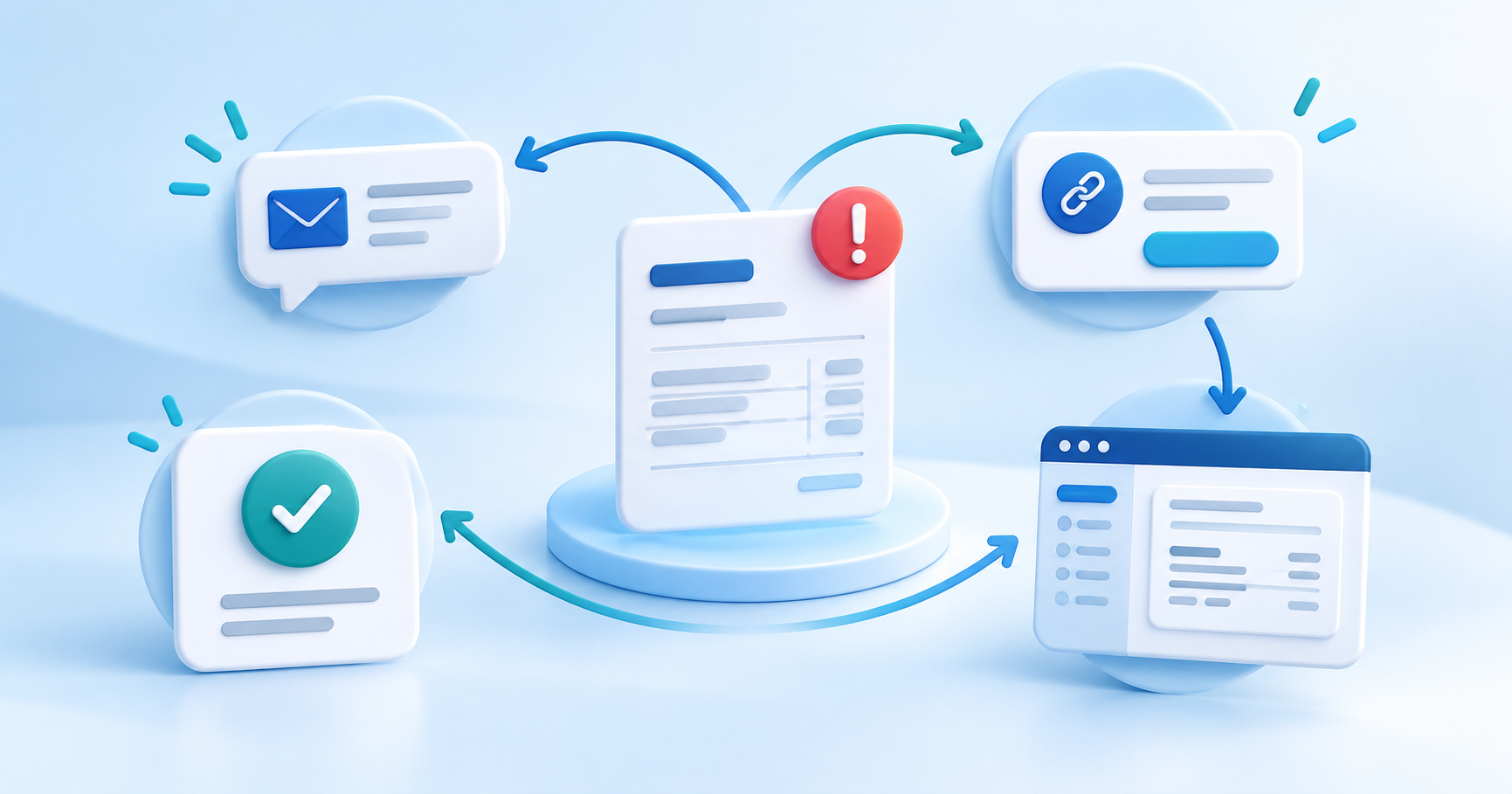
Every B2B transaction starts with a conversation about money, yet many business owners use the words quote, estimate, and invoice interchangeably. That confusion costs real revenue. Sending an estimate when a client expects a binding quote can unravel a deal. Invoicing before scope is agreed upon leads to disputes and delayed payments.
This guide breaks down exactly what each document does, when to use it, and how modern billing platforms turn the quote-to-invoice workflow into a competitive advantage.
What Is a Quote?
A quote — sometimes called a quotation — is a formal document that states a fixed price for a defined scope of work. Once a client accepts it, that price is locked in for the validity period you set.
Quotes remove ambiguity from the sales process. When a web agency sends a client a quote for €8,500 to redesign their website, both parties know exactly what is included: number of pages, revision rounds, delivery timeline, and payment terms. There is no grey area about cost.
This clarity accelerates decision-making. Research from billing platform data shows that clients who receive formal quotes approve projects 3x faster than those who receive back-and-forth email estimates. The psychology is simple — a professional quote signals confidence and competence.
A complete quote contains your business details, the client's details, a unique quote number, itemised line items with quantities and unit prices, applicable VAT or tax, total amount, validity period (typically 14-30 days), and terms and conditions. Many quotes also include optional items that let clients upgrade their package without requesting a new document.
The validity period is particularly important. It protects you from cost fluctuations in materials, subcontractor rates, or exchange rates. A 14-day expiry also creates natural urgency — clients know the price will not last forever.
What Is an Estimate?
An estimate is an approximate calculation of what a project is likely to cost. Unlike a quote, it is not a price commitment. Estimates signal good faith and give the client a ballpark figure to plan their budget around.
Estimates work best when the full scope is not yet clear. A plumber called to fix a leak might give an estimate of €200-€400 because the actual problem is hidden behind a wall. A marketing consultant might estimate a campaign at €3,000-€5,000 depending on how many channels the client wants to activate.
The flexibility of an estimate protects both parties. The client gets a realistic range to budget against, and the service provider is not locked into a price before understanding the real scope. Once the discovery phase is complete, the estimate typically evolves into a formal quote with fixed pricing.
The critical difference is obligation. A quote is a promise: if the client accepts within the validity period, you are committed to delivering at that price. An estimate is a projection: it communicates intent but leaves room for the final price to shift as the project develops.
| Quote | Estimate | |
|---|---|---|
| Price | Fixed, locked in | Approximate, may change |
| Legally binding | Yes, once accepted | No |
| Best for | Defined scope | Unclear or evolving scope |
| Validity | 14-30 days typical | No formal expiry |
| Client expectation | Exact cost | Budget range |
What Is an Invoice?
An invoice is a formal request for payment after goods have been delivered or services rendered. It is the financial close of a transaction — the document that triggers the client's obligation to pay.
In B2B billing, invoices are governed by strict rules. They must include a unique invoice number, your VAT registration, the client's details, a clear description of what was delivered, the total amount due, and the payment deadline. In the EU, invoices must also comply with local tax regulations, including reverse-charge rules for cross-border transactions.
Most B2B invoices carry payment terms of net-14 to net-30 days. The gap between issuing an invoice and actually receiving payment is where cash flow problems begin. According to European Payment Report data, the average B2B payment in Europe takes 34 days — and 48% of invoices are paid late.
Here is where the three documents form a workflow. A client requests a quote. You send a professional quote with fixed pricing. The client approves it. You deliver the work. You convert the approved quote into an invoice. The client pays.
This quote-to-invoice pipeline is the backbone of healthy B2B billing. When the quote is already approved, the invoice becomes a formality rather than a negotiation. Clients rarely dispute an invoice that matches an approved quote line for line.
Quote to Invoice: The Workflow That Accelerates Payment
The fastest-paying businesses are not the ones who chase payments hardest — they are the ones who get agreement before the work starts. A proper quote-to-invoice workflow creates that agreement.
Without a billing platform, the typical workflow looks like this: you discuss pricing over email, type up a quote in Word or Google Docs, send it as a PDF attachment, wait for a reply, start work based on a verbal "go ahead", finish the work, create an invoice from scratch in a separate tool, and hope the client pays within terms.
Every handoff in this chain is a leak. The quote might not match the invoice because you retyped the line items. The client might not have formally accepted the quote, so they dispute the invoice. There is no audit trail showing when the quote was viewed, accepted, or expired.
With a platform like PayRequest, the workflow collapses into a seamless pipeline:
- Create a quote — add line items, set VAT, add optional items, set the validity period
- Send it digitally — the client receives a branded quote page with an "Approve" button
- Track engagement — see when the client opens the quote and how long they spend reviewing it
- Client approves online — one click, with an optional digital signature
- Convert to invoice — one click turns the approved quote into a professional invoice, carrying over every detail
- Client pays — through payment links, bank transfer, or the customer portal
This flow eliminates double data entry, removes ambiguity, and creates a clear audit trail from first conversation to final payment. Businesses using this approach report 85% quote approval rates and significantly faster payment cycles.
When to Use Each Document
Choosing between a quote, estimate, and invoice is not about personal preference — it depends on where you are in the client relationship and how well-defined the scope is.
You should send an estimate when the client is still exploring options, the project scope is genuinely unclear, you need to do a discovery phase before committing to a price, or the work involves variables you cannot control (materials, third-party costs, regulatory changes). Estimates are conversation starters. They say: "Here is roughly what this will cost, let us discuss the details."
Send a quote when the scope is fully defined, you are confident in your pricing, and you want to close the deal. Quotes are commitment devices. They say: "This is exactly what you will get, for exactly this price, if you say yes within 14 days."
For most B2B service businesses — agencies, consultants, designers, freelancers — the ideal flow is a brief estimate during the sales conversation, followed by a formal quote once the scope is agreed.
Send an invoice after the work is delivered (or a milestone is reached) and the client has already approved the pricing via a quote. Never send an invoice as a first touch — it signals that you expect payment without prior agreement, which damages trust.
The exception is recurring billing. For subscriptions and retainers, the initial quote covers the ongoing arrangement, and invoices are generated automatically each billing cycle.
Common Mistakes That Cost You Money
Understanding the theory is one thing. Avoiding the practical pitfalls is where businesses actually protect their revenue.
When you send an estimate but treat it as a binding agreement, you set yourself up for scope disputes. The client sees "approximately €3,000" and budgets exactly €3,000. When the final invoice comes in at €3,800, they feel blindsided — even though you never promised the lower figure.
The fix: always convert estimates into formal quotes before starting work. Make the transition explicit: "Based on our discovery call, here is the fixed-price quote for the agreed scope."
Sending an invoice without a previously approved quote or estimate puts you in the weakest negotiating position. The client has already received the work, and now you are hoping they agree to pay the amount you have decided on. Disputes, delays, and discounts follow.
A quote with no follow-up is a missed opportunity. Set up automated reminders before the expiry date. PayRequest's quote management sends expiration reminders automatically, so clients are nudged to act before the price resets.
Retyping line items from a quote into a separate invoice tool introduces errors and wastes time. Every billing platform worth using — including PayRequest's invoicing — supports one-click quote-to-invoice conversion. If yours does not, switch.
How PayRequest Streamlines the Entire Flow
PayRequest is designed specifically for B2B businesses that need a professional quote-to-payment pipeline without complexity.
Create branded quotes with itemised line items, optional upgrades, custom validity periods, and terms and conditions. Clients approve online with a single click. When approved, convert to an invoice instantly — every detail carries over.
Professional invoices with automatic payment reminders, multiple payment methods (Stripe, Mollie, PayPal), and a customer portal where clients can view, download, and pay all their invoices in one place.
Beyond quotes and invoices, PayRequest includes subscriptions for recurring billing, dunning for failed payment recovery, payment matching for bank reconciliation, and a full client management system. Everything a B2B business needs to get paid — in one platform at €20/month.
Conclusion
Quotes, estimates, and invoices are not interchangeable — they are distinct steps in a billing workflow that, when executed properly, accelerate payments and reduce disputes. Estimates open the conversation. Quotes close the agreement. Invoices trigger the payment.
The businesses that get paid fastest are the ones who professionalise this pipeline: branded quotes with online approval, one-click invoice conversion, and automated reminders at every stage. If your current process involves email PDFs and manual data entry, you are leaving money and time on the table.
Start sending professional quotes with PayRequest — create your first quote in under two minutes, convert it to an invoice with one click, and get paid faster.