Late payments are the silent killer of B2B cash flow. A 2025 Intrum European Payment Report found that 48% of European businesses experience cash flow difficulties due to late-paying clients. The traditional solution — handing unpaid invoices to a collection agency — costs 15-25% of every euro recovered and damages client relationships.
There is a better way. Modern billing software lets you run the entire debt collection process in-house, from friendly reminders to formal notices and payment plans, without ever involving a third party.
Why B2B Businesses Lose Money to Collection Agencies
External collection agencies have been the default for decades, but the economics rarely make sense for B2B businesses with ongoing client relationships.
When you hand a €5,000 overdue invoice to a collection agency, you do not recover €5,000. The agency takes a commission of 15-25%, meaning you receive €3,750-€4,250 at best. On top of that, many agencies charge setup fees, minimum case fees, and administrative costs.
For a business with €50,000 in overdue receivables per year, agency commissions alone cost €7,500-€12,500 — money that goes straight to the agency instead of your bottom line.
In B2B, your clients are not anonymous consumers. They are businesses you work with month after month, often on retainer or subscription agreements. When a third-party collection agency contacts your client, the dynamic changes permanently.
The client feels embarrassed, frustrated, or adversarial — none of which help you retain their business. Many B2B relationships end permanently after a collection agency gets involved, even if the payment dispute was resolved.
The 4-Stage In-House Collection Process
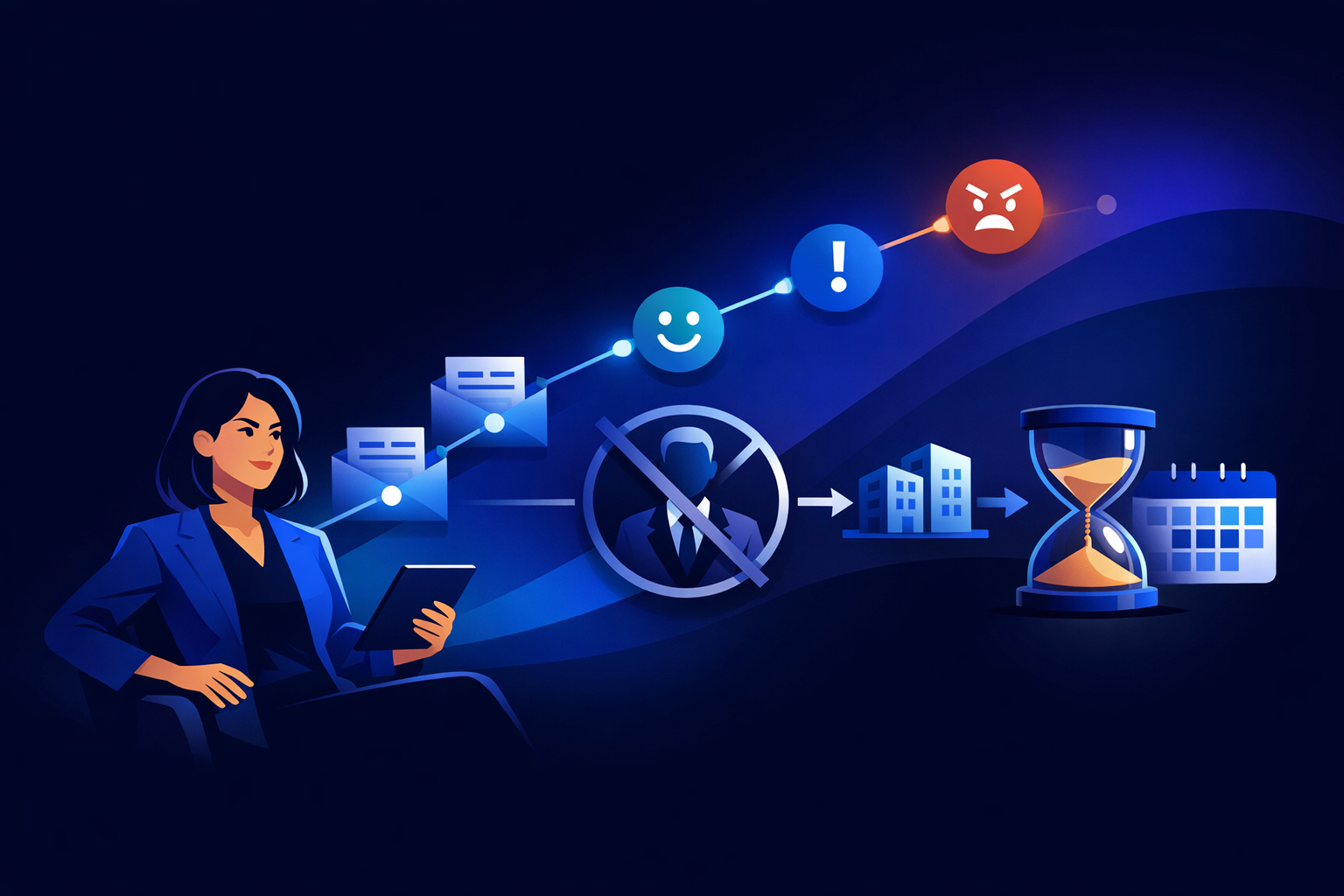
Effective debt collection follows a structured escalation that increases urgency gradually while preserving the client relationship. Here is the process that recovers 85% of overdue B2B invoices without external help.
Most late payments are not intentional. Your client forgot, their accounts payable person was on holiday, or the invoice got buried in email. A friendly reminder solves 60% of overdue invoices.
Send an email and SMS with a direct payment link that lets the client pay in one click. Keep the tone helpful — "We noticed this invoice is past due. Here is a quick link to pay." No threats, no formality, just a helpful nudge.
The key is speed. Send the first reminder within 3-7 days of the due date, not after 30 days when the client has already mentally categorized the invoice as "disputed" or "forgotten."
If the friendly reminder does not work, escalate to a formal payment demand with a clear deadline. This communication should be professional and firm — it is no longer a reminder, it is a notice.
Include the invoice number, original due date, outstanding amount, and a specific deadline (typically 7-14 days from the notice). Send via email and consider postal mail for added weight. A physical letter signals seriousness in a way email cannot.
At this stage, you should also mention that collection fees may be added if payment is not received — this is not a threat, it is a factual statement about what happens next.
Under the EU Late Payment Directive, B2B creditors are entitled to at least €40 in fixed recovery costs. In the Netherlands, the WIK regulation provides a tiered fee schedule starting at 15% on the first €2,500.
Add the statutory collection fees to the outstanding balance and notify the client. The balance now includes the original invoice plus incassokosten. Most clients who reach this stage pay quickly when they see fees accumulating.
Send the updated balance via email and postal mail. The client should be able to see the complete breakdown — original amount, collection fees, and total owed — in their customer portal.
The final stage is a last-chance notice before considering legal action. Send via registered post with proof of delivery. The letter should state clearly that this is the final attempt at out-of-court resolution and that continued non-payment may result in legal proceedings.
At this point, you should also offer a payment plan as an alternative. Many clients who cannot pay the full amount (especially with added collection fees) are willing to pay in installments. A payment plan that recovers 100% over 3-6 months is better than litigation that costs time and money with uncertain outcomes.
How to Automate the Entire Process
Manual debt collection does not scale. If you have 10-20 overdue invoices at any given time, tracking stages, sending reminders, calculating fees, and managing payment plans becomes a full-time job.
Modern invoicing software with built-in debt collection automates the entire pipeline. Here is what to look for:
Automated escalation — The system should automatically progress cases through stages based on how many days the invoice is overdue. No manual triggers, no calendar reminders, no human intervention required.
Multi-channel delivery — Reminders should go out via email, SMS, and postal mail. Different channels have different response rates, and using all three increases your recovery rate significantly.
Collection fee calculation — The software should automatically calculate statutory collection fees based on the outstanding amount and local regulations (WIK in the Netherlands, EU Late Payment Directive for cross-border).
Customer portal — Your client should be able to see their outstanding balance, collection fees, payment history, and available payment plans in a self-service portal. This reduces back-and-forth emails and lets clients resolve their debt on their own terms.
Payment plans — The system should support splitting debts into monthly installments that are billed automatically via SEPA direct debit. When the final installment is paid, the case should close automatically.
| Approach | Cost | Recovery | Client relationship |
|---|---|---|---|
| External agency | 15-25% of collected amount | 60-70% | Damaged |
| In-house with software | €20/month flat | 80-85% | Preserved |
| Manual (DIY) | Staff time | 50-60% | Varies |
At €20/month, automated in-house collection costs a fraction of agency fees and delivers better results because you maintain the client relationship throughout the process.
Best Practices for B2B Debt Collection
The biggest mistake B2B businesses make is waiting too long to start the collection process. Every week you wait reduces the probability of recovery. Send the first reminder within 7 days of the due date, not 30.
Even at the final warning stage, never use threatening or aggressive language. B2B debt collection is a business process, not a personal conflict. Professional communication preserves the possibility of continuing the business relationship after the debt is resolved.
Do not wait for the client to ask. At Stage 2 or Stage 3, proactively offer a payment plan. Collecting €5,000 over 3 months is better than collecting €0 because the client could not afford the lump sum.
Keep a complete record of every communication, every reminder sent, every response received. This activity log is essential if you ever need to escalate to legal proceedings. Activity logging in your billing software should track all of this automatically.
In-house collection works for the vast majority of B2B cases. However, if a client is unresponsive after the final warning and the amount justifies legal costs, it may be time to involve a lawyer or bailiff. Having a complete case file from your automated process makes this transition seamless.
Getting Started with In-House Collection
You do not need to build a collection system from scratch. PayRequest includes a complete debt collection feature with automated escalation, multi-channel reminders, collection fee calculation, payment plans, and customer portal integration — all included in the €20/month Business plan.
The setup takes less than 5 minutes: connect your payment provider, configure your escalation schedule, and let the system handle the rest. When an invoice goes overdue, a collection case is created automatically and the escalation pipeline begins.
Stop losing 15-25% of your recovered amounts to collection agencies. Start collecting overdue payments yourself with the same professional process, but at a fraction of the cost.